Sewer Camera Inspections: What They Show and What Happens Next
A sewer camera inspection sends a small camera through the sewer line to show blockages, roots, cracks, breaks, and pipe condition. PlumbingKentwa.link uses the findings to explain the next step, such as drain cleaning, hydro jetting, repair, or replacement.
Request an EstimateHow Does a Sewer Camera Inspection Work?
A sewer camera inspection guides a small camera through the sewer line while we watch and document the pipe condition. At PlumbingKentwa.link, we use the video inspection to connect visible conditions with the right service option.
Cleanout access gives our crew an entry point into the line. We guide the camera head on a push rod, watch the monitor, and use a camera locator when the problem's position needs to be marked.
Camera visibility depends on access and the condition inside the pipe. Heavy water, debris, or a tight blockage can limit the view.
What Can a Sewer Camera Inspection Show?
A sewer camera inspection can show where a problem is located and what type of pipe damage or blockage is present. The video helps us separate a flow problem from visible damage in the sewer lateral.
Each finding points toward a different next step. The table shows what the camera may reveal and why the finding matters.
| Camera finding | What it can mean |
|---|---|
| Blockage | Waste, buildup, or another obstruction is limiting flow. |
| Tree roots | Root growth has entered through a pipe joint, crack, or damaged area. |
| Cracked pipe | The pipe wall has visible damage that may allow leaks or root intrusion. |
| Broken pipe | A section has failed and may restrict flow or release wastewater. |
| Collapsed pipe | The passage is partly or fully closed by a failed pipe section. |
| Pipe separation | A pipe joint has pulled apart or shifted. |
| Corrosion | The pipe surface has deteriorated and may have reduced strength. |
| Belly | A low section may hold water and collect waste. |
| Debris | Material inside the line is affecting the opening or flow path. |
| Sewer connection | The camera may show where another line joins the sewer line. |
A camera shows visible conditions from the camera's path. It doesn't prove the condition of areas the camera can't reach or see.
Can a Sewer Camera Find Tree Roots or a Broken Pipe?
Yes, a sewer camera can often show tree roots, cracks, breaks, separated joints, and the location of an obstruction. The video gives our team a direct view of the blockage location and the nearby pipe joint.
Tree root intrusion often appears as growth entering through a joint or damaged section. Root buildup can reduce flow and cause a recurring backup.
A broken sewer pipe or cracked sewer pipe may show an open gap, a rough edge, or a displaced section. The camera view helps us judge whether the visible damage needs cleaning, repair, or replacement.
What Can the Camera Confirm About the Sewer Line?
A sewer camera can confirm visible pipe conditions, but heavy water, debris, or a blocked passage can limit what the camera sees. Our team explains the limits of the view before using it to make a repair recommendation.
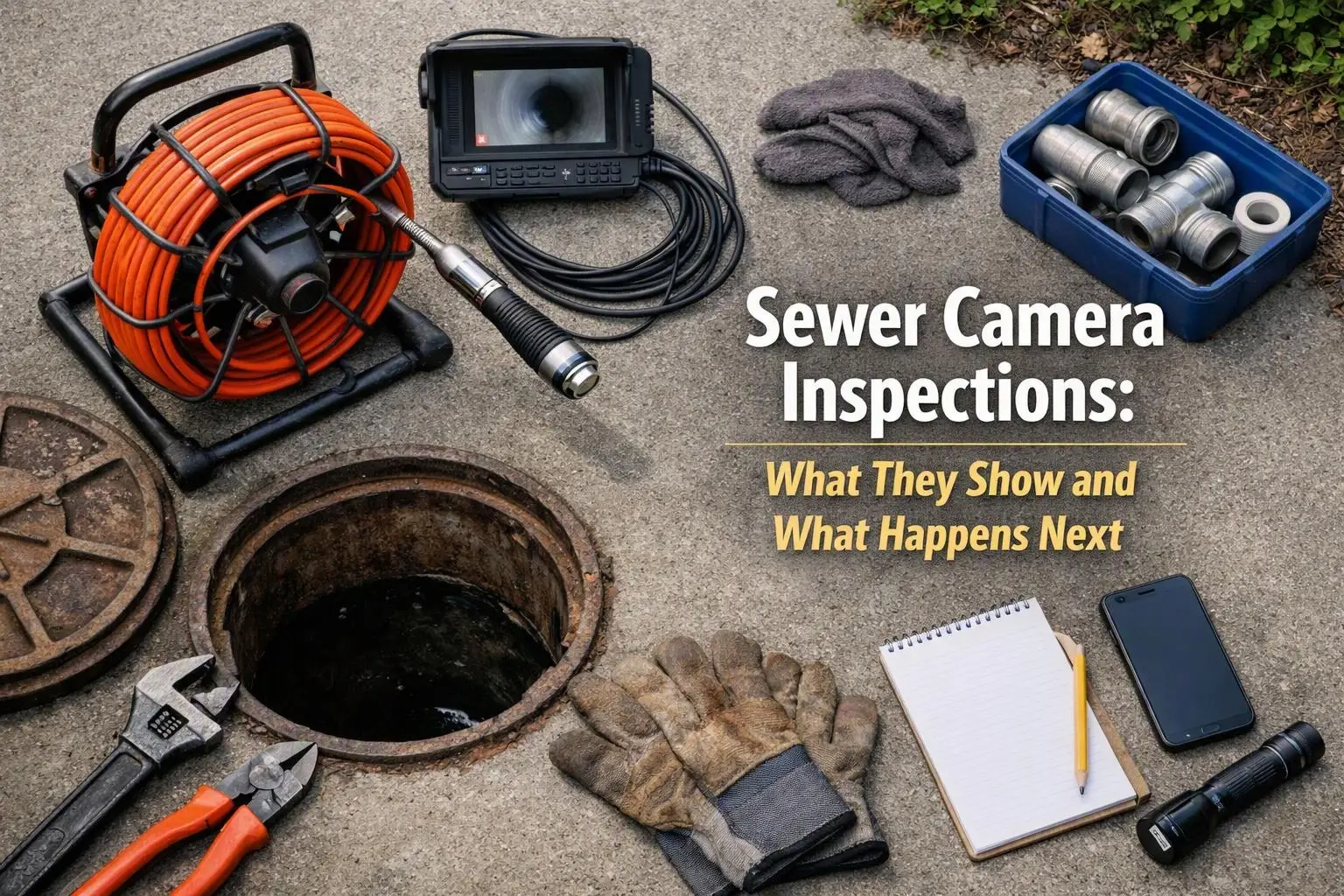
The inspection may show pipe material, pipe condition, line direction, and a connection point. It can also identify an obstruction location when the camera reaches the affected area.
Camera visibility matters because a blocked passage can prevent the camera from reaching the rest of the line. A camera locator can help identify the path or position of a visible problem, but the result still depends on access and signal quality.
Our team can discuss a sewer camera inspection when slow drains, recurring backups, or sewer odor suggest a deeper line problem.
What Happens After a Sewer Camera Inspection?
After a sewer camera inspection, we review the findings with you and match the visible problem to the next service step. Our recommendation depends on the obstruction, pipe condition, access, and visible damage.
A soft blockage may need drain cleaning, while heavy buildup or root material may call for hydro jetting. Visible pipe failure may require sewer line repair, sewer line replacement, or trenchless sewer repair.
We explain what the camera shows and what it cannot confirm. We also outline the work needed to restore flow or address damaged sections.
When Is Drain Cleaning or Hydro Jetting the Next Step?
Drain cleaning is often the next step when a soft blockage, grease buildup, or loose debris is restricting flow. Our team considers the pipe access and the condition shown by the camera.
Hydro jetting may be suitable when buildup or root material coats the inside of an accessible pipe. The method uses controlled water pressure to clear material from the pipe wall.
We choose the cleaning method after reviewing the video and the pipe condition. Severe damage may need repair before cleaning equipment can safely pass.
When Is Sewer Line Repair or Replacement Needed?
Sewer line repair may be needed when the camera shows a localized crack, break, separated joint, or severe root intrusion. Our team considers the damage location and the remaining pipe condition.
Sewer line replacement may be the better option when a collapsed pipe or widespread pipe failure affects the line. The recommendation also depends on access and how much of the pipe is damaged.
Trenchless sewer repair can be considered when the site and pipe condition support that method. We explain whether repair, replacement, or a trenchless sewer assessment fits the visible problem.
What Should You Have Ready Before the Inspection?
Before a sewer camera inspection, have the sewer cleanout, plumbing fixtures, drain symptoms, previous repairs, and property access details ready. These details help our team plan the inspection and understand the line's history.
Clear access supports a better inspection. Share when the slow drain, backup, or sewer odor started, and tell us which fixtures are affected.
Questions About Sewer Camera Inspections
Can a sewer camera inspection locate a blockage?
Yes, a sewer camera inspection can often locate a blockage when the camera reaches it. A camera locator may help mark the position of the visible obstruction.
Can a sewer camera inspection show the pipe material?
Yes, a sewer camera inspection can often suggest the pipe material from the visible surface and pipe connections. The view may be limited when water, debris, or damage blocks the camera.
What if the sewer camera cannot pass through the pipe?
If the sewer camera cannot pass through the pipe, we document the stopping point and explain what blocked the view. A blockage, collapse, tight bend, or heavy debris can prevent a complete inspection.
Does a sewer camera inspection tell you where the sewer line runs?
Yes, a sewer camera inspection can help show the line direction when the camera moves through an accessible section. A camera locator can help identify the position of the camera and visible findings.