Signs a Plumbing Backup May Be Coming From the Main Sewer Line
Signs of a main sewer line problem include multiple backed-up drains, toilet water rising in a tub, gurgling sounds, slow drainage, and sewage odors. PlumbingKentwa.link can use a sewer camera inspection to identify the blockage or damage before we recommend cleaning, repair, or replacement.
Request an EstimateHow a Main Sewer Line Problem Differs From a Local Drain Clog
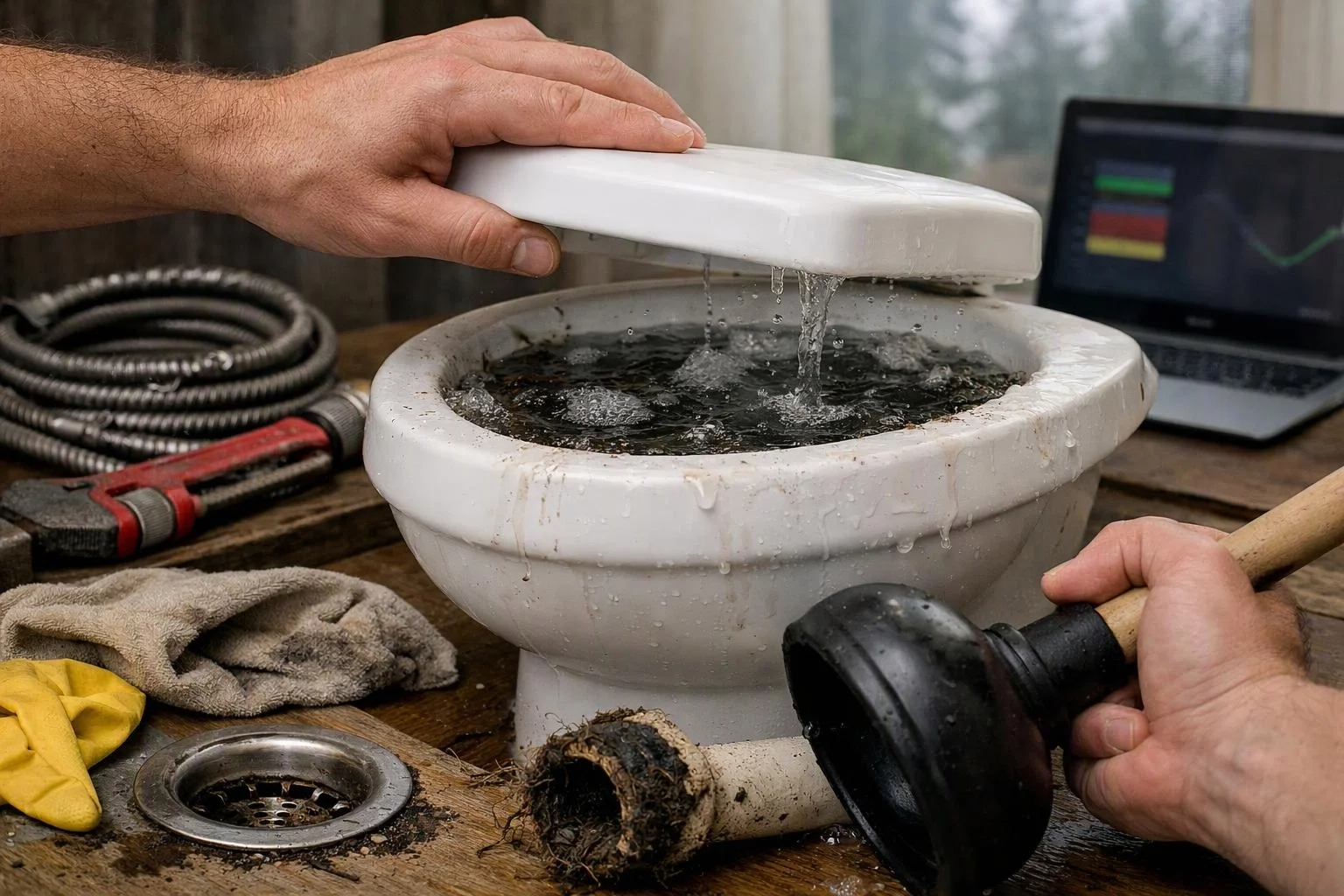
A main sewer line problem affects several plumbing fixtures, while a local clog usually affects one fixture.
The main sewer line carries wastewater from branch drains toward the sewer system. A local drain clog sits closer to one sink, toilet, tub, or other fixture.
When wastewater cannot move through the main line, several fixtures may show trouble. A single slow drain points more often to a local drain clog.
Warning Signs of a Main Sewer Line Problem
These warning signs can show that a shared sewer pipe is restricted. A recurring problem deserves attention before sewage reaches living areas.
Why Multiple Drains Back Up at Once
Multiple drains back up at once when a blockage or damaged section restricts the shared main sewer line.
Wastewater from sinks, toilets, tubs, and other fixtures may meet the same restriction. Branch lines can still carry water, but the blocked sewer pipe prevents normal drain flow.
Tree roots, buildup, pipe damage, and a pipe belly can all reduce the open space inside the line. The pattern across several fixtures helps us separate a main drain problem from a local clog.
Why Water Rises in the Tub When You Flush
Water rises in the tub when flushing pushes wastewater against a blockage in a shared drain or main sewer line.
The toilet and bathtub may connect to the same drain path. If the blocked sewer line cannot accept the added flow, water may move toward the tub drain.
Toilet bubbling, water rising in the tub, and slow drainage together suggest a larger sewer line concern. Stop using affected fixtures until the flow path is checked.
Do Gurgling Drains Mean a Sewer Line Problem?
Gurgling drains can signal a sewer line problem, especially when several fixtures drain slowly or back up.
A gurgling drain often means air pressure is changing around a restriction. Air can move through a drain trap when wastewater struggles to pass.
A vent system issue can also create unusual sounds. Several gurgling fixtures, sewage odor, or recurring backup makes a sewer line blockage more likely.
What We Check Before Recommending Sewer Line Work
We check the sewer cleanout, the main sewer line, and the pattern of affected fixtures before recommending work.
Our team looks for a pipe blockage, tree roots, a cracked pipe, a collapsed pipe, or a pipe belly. We also consider whether the issue sits in a branch drain or the shared sewer pipe.
These findings help us decide whether cleaning may restore flow or whether pipe damage needs repair. We do not recommend sewer line replacement without evidence that the existing line cannot be reliably used.
When a Sewer Camera Inspection Makes Sense
A sewer camera inspection makes sense when backups recur, several fixtures are affected, or the blockage source isn't clear.
Our team can inspect the pipe through an access point and use the findings to guide the next step. Video inspection shows the pipe interior, blockage location, pipe damage, and overall sewer line condition.
We use the inspection results to guide cleaning, hydro jetting, sewer line repair, or a replacement decision. You can learn more about our sewer camera inspection service.
DIY Checks and When to Call Us
Safe observations can help identify the pattern, but sewer line work needs trained equipment and careful diagnosis.
Use the comparison below to decide what you can observe and what our team should handle.
| Factor | What you can do yourself | What we do |
|---|---|---|
| Plumbing fixture | Note which fixtures drain slowly, gurgle, or back up. | We compare the pattern across fixtures and trace the likely flow path. |
| Drain cover | Keep visible drain covers clear and avoid adding chemical cleaners. | We assess whether the restriction is local or farther along the line. |
| Sewer cleanout | Look for pooling near an accessible cleanout without opening a pressurized line. | We use the access point for safe diagnosis and equipment. |
| Sewer camera inspection | You can arrange an inspection when the source remains unclear. | We inspect the pipe interior and identify blockage or damage. |
| Hydro jetting | Do not attempt high-pressure sewer cleaning yourself. | We determine whether hydro jetting suits the pipe condition. |
| Repair or replacement | Avoid digging or opening damaged sewer lines. | We explain sewer line repair, sewer line replacement, or trenchless sewer repair when the evidence supports it. |
What Changes the Cost of Main Sewer Line Work
Main sewer line work costs depend on the blockage or damage, pipe access, excavation needs, and selected repair method.
Pipe material, pipe depth, tree roots, and pipe damage can change the work involved. Hydro jetting may suit some blockages, while sewer line repair or replacement may suit damaged pipe.
Trenchless sewer repair can have different site requirements from open excavation. We review those job conditions and explain what our written quote includes before work begins.
To obtain an exact quote, contact our team after we assess the sewer line condition and the needed repair method.
What to Do When a Main Sewer Line Backup Starts
A main sewer line backup needs quick action to limit wastewater spread and protect people in the home.
Questions About Main Sewer Line Backups
Can tree roots cause a main sewer line backup?
Yes, tree roots can cause a main sewer line backup by entering joints or cracks and restricting wastewater flow. Our team uses inspection findings to check for root intrusion before recommending cleaning or repair.
Can plunging fix a main sewer line problem?
Plunging may help a local fixture clog, but it usually cannot clear a blockage deep in the main sewer line. Multiple drains backing up or sewage returning through another fixture calls for a proper diagnosis.
What happens if a main sewer line backup is ignored?
Ignoring a main sewer line backup can lead to repeated sewage backup, worsening pipe damage, and contaminated areas inside or near the home. Our team can inspect the line and explain the repair method supported by the findings.