Why does my faucet drip after I turn it off?
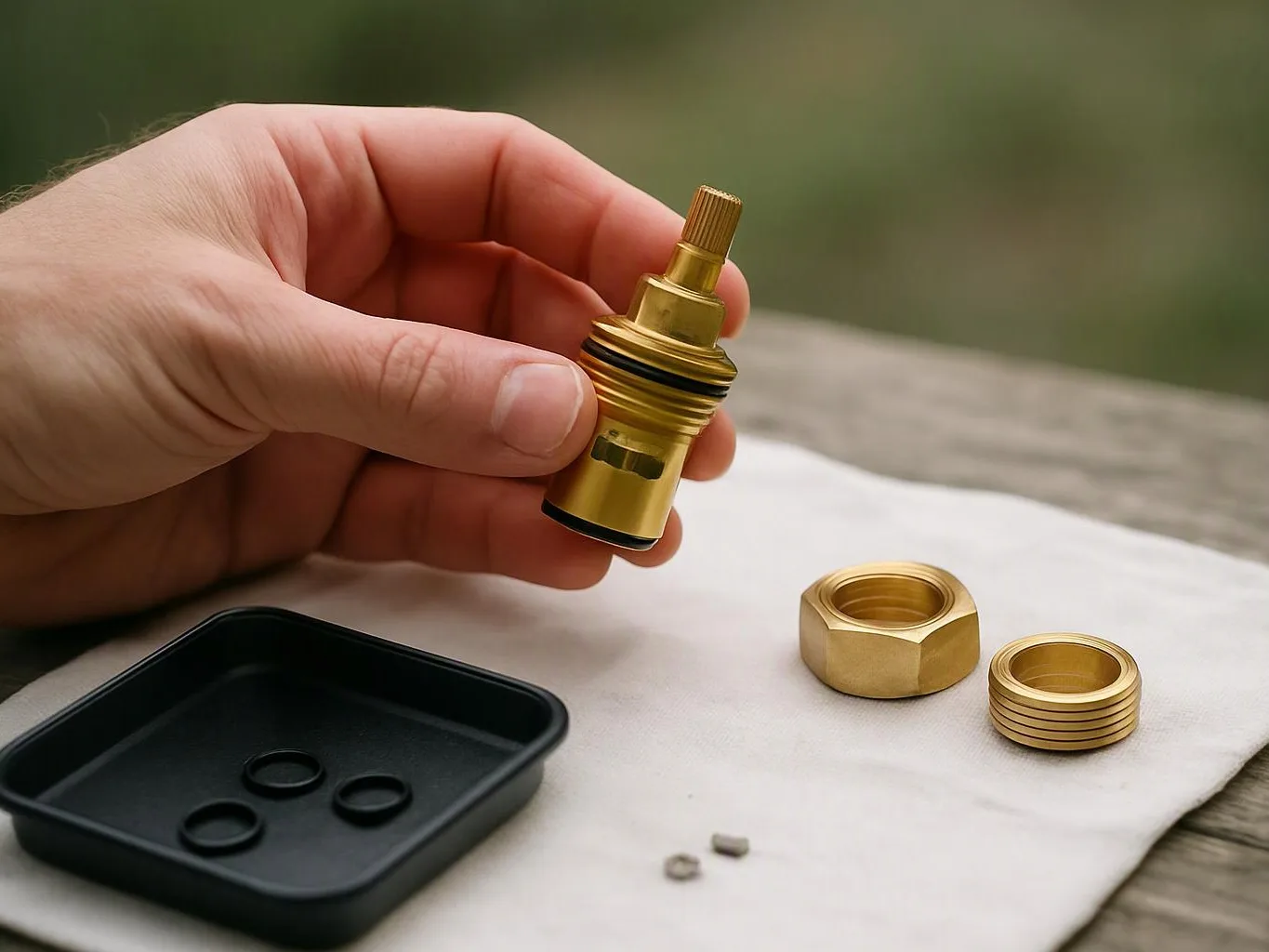
A Worn cartridge can leave water moving through the faucet after shutoff. The part controls flow inside many single-handle fixtures, but a washer, O-ring, or valve seat can create a similar symptom. We trace the water path before choosing the repair. A steady drip should be assessed before it reaches the cabinet or damages the sink area.
How do you match the repair to my faucet?
The faucet design and leak location determine the repair approach. We check the handle, spout, body, shutoff, and accessible internal parts before setting the scope. Photos of the fixture can help with the first review, but the faucet still needs an inspection before the correct part is selected. Access around the sink also matters.
What should I do before faucet work starts?
Clear the sink and cabinet area before the assessment. Keep stored items away from the shutoff and supply connections, and avoid forcing a stiff handle. Useful details include where the water appears, whether the drip continues after shutoff, and whether the faucet serves a kitchen, bathroom, utility area, or business sink.
Which faucet condition changes the repair price?
The faucet design, faulty part, access, and supply connection condition change the repair scope. A cartridge or seal check may stay within the fixture, while corrosion or a damaged connection can add work. We explain those findings before the repair proceeds. Requesting a quote gives you a cost based on the actual faucet condition.
When is a dripping faucet an urgent plumbing problem?
A faucet needs urgent attention when water is spreading into the cabinet, wall, floor, or electrical area. A small spout drip is often a planned repair, but a supply connection leak can worsen quickly. Close the local shutoff if it works safely, protect nearby items, and request urgent service when the leak cannot be controlled.
Who provides faucet repair for homes and businesses?
PlumbingKentwa.link provides faucet repair for residential and commercial properties. We address dripping spouts, loose handles, worn internal parts, and visible connection leaks. The work begins with the fixture symptom and access conditions, then moves to a repair scope suited to the property. This approach also helps identify when the problem belongs to a pipe or drain service.
Why does the handle feel stiff before the faucet starts dripping?
A stiff handle can signal wear, mineral buildup, or trouble inside the water-control parts. The force needed to move the handle can strain seals and leave the faucet unable to shut off fully. Stop forcing the handle, note when the stiffness began, and request an inspection before the control breaks or the leak spreads.