How to Check for Sump Pump Problems Before You Need It
Signs a sump pump is failing include unusual noises, weak discharge, constant cycling, no pump response, and rising water in the pit. PlumbingKentwa.link checks the pump, power, discharge path, float, and backup needs before failure causes basement flooding.
Request an EstimateWhat Are the Red Flags of a Failing Sump Pump?
A failing sump pump often shows unusual sounds, weak discharge, repeated cycling, or no response when water rises.
These warning signs can involve the motor, float, discharge pipe, or sump pit. Finding the cause early can reduce the risk of water in the basement.
Before You Test the Sump Pump
A safe sump pump test starts with power, water, and discharge checks. Stop if you see damaged wiring, standing water near electrical connections, or other electrical hazards.
Never reach into the pit while the pump is connected to power. Call our team for electrical safety concerns or regulated plumbing work.
How to Check Whether the Sump Pump Works
You can check a sump pump by confirming power, raising the float safely, and watching for steady discharge away from the foundation.
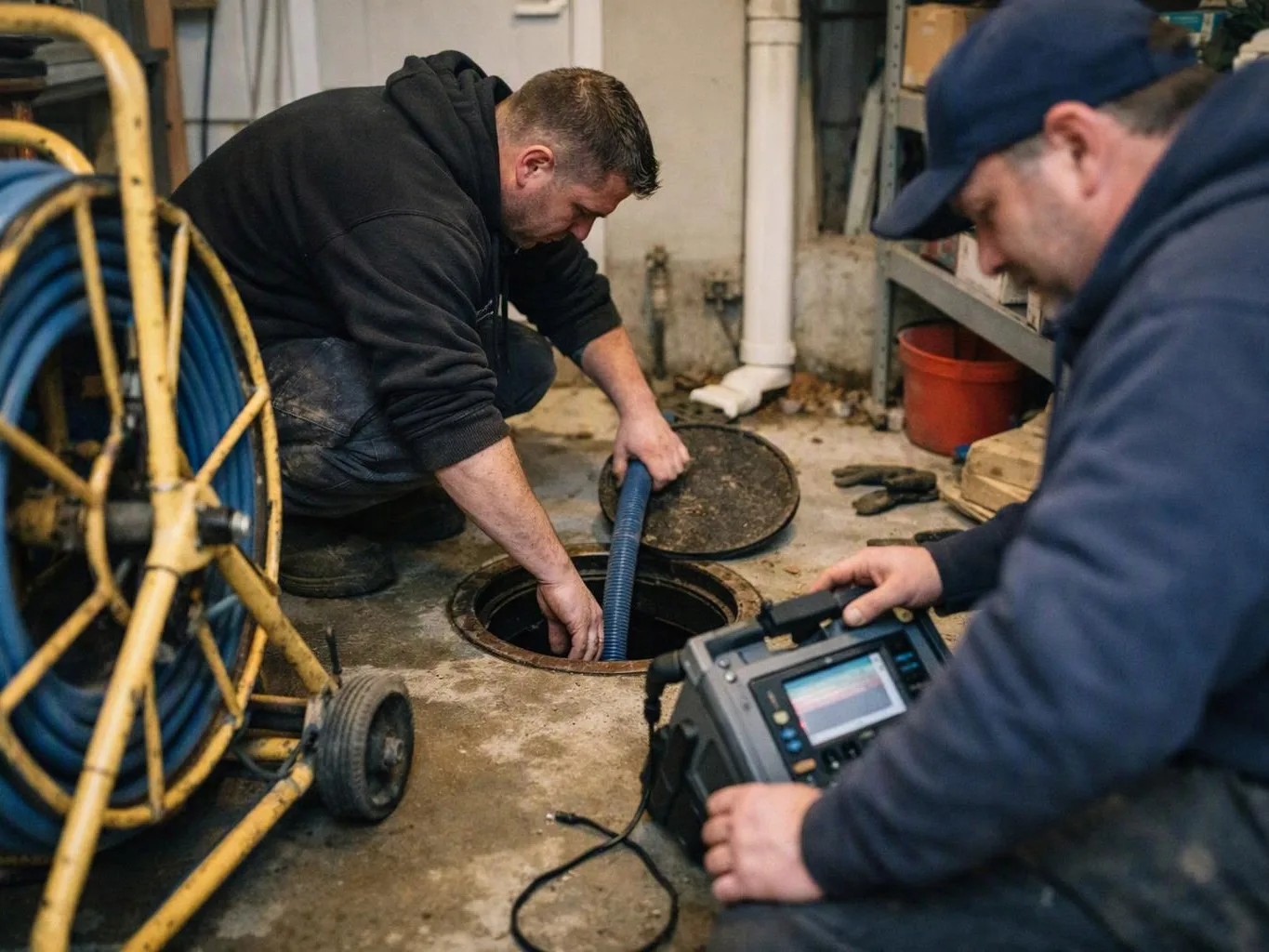
With the area safe, add clean water to the sump pit slowly. Watch for the float switch to activate the pump. The pump should start without grinding, humming without movement, or repeated hesitation.
Check the discharge flow at the outlet. Water should move away from the foundation, and the check valve should prevent water from returning to the pit. If the pump does not activate, disconnect power only when it is safe and contact our team.
During the Sump Pump Check
During a sump pump check, watch how the motor, float, pit, and discharge system work together. A single test can reveal a weak pump or a problem outside the pump itself.
Do not remove electrical covers or place your hands into moving equipment. Our crew should handle faults that involve wiring, fixed plumbing, or damaged components.
What Different Sump Pump Symptoms Can Mean
Sump pump symptoms can point to different faults in the pump, float, check valve, or discharge system. The table helps connect each symptom with a likely area to inspect.
One symptom may have more than one cause. Our team checks the full system before recommending sump pump repair or pump replacement.
| Symptom | Possible area of concern | What it may mean |
|---|---|---|
| Constant running | Float, groundwater, or discharge system | The pump may be handling steady inflow, a stuck float, or restricted discharge. |
| Short cycling | Float setting, check valve, or pit level | The pump may start and stop too often because water returns or the float moves poorly. |
| Grinding noise | Motor or impeller | A damaged or obstructed moving part may be reducing pump performance. |
| Humming | Motor, power, or impeller | The pump may have power but fail to turn the impeller. |
| No discharge | Blocked discharge line or failed check valve | Water may not be leaving the system even when the motor runs. |
| Basement water | Pump failure, power loss, or drainage problem | The system may not be removing groundwater from the foundation drainage path. |
After You Test the Sump Pump
After testing, record what you noticed and keep the pump basin clear. Follow-up maintenance can help expose problems before heavy rain or a power outage.
Our team can assess the pump, discharge outlet, and backup protection when a test shows weak performance or unreliable activation.
When Sump Pump Problems Need Repair
Sump pump repair is needed when the pump fails to activate, cannot move water, runs constantly, or has an electrical or discharge fault.
Our team checks whether the issue involves the pump motor, float switch, power supply, check valve, or blocked discharge line. We also look for conditions that could cause basement flooding during heavy rain or a power outage.
Some failures call for pump replacement when the equipment cannot provide reliable water removal. New sump pump installation may also be appropriate when the existing basin, discharge system, or backup protection does not meet the home’s needs.
Electrical faults and fixed plumbing changes require licensed plumbing work. Contact our team through Sump Pump Repair when testing shows a safety concern or repeated failure.
How We Check Sump Pump Reliability
At PlumbingKentwa.link, we inspect the full sump pump system, not only the motor.
Our sump pump inspection covers pump capacity, float switch movement, check valve action, and the discharge system. We assess the pump basin and discharge outlet for conditions that can reduce flow or cause repeated cycling.
We also review backup protection, including a backup sump pump or water alarm when the home needs added flood prevention. Our findings explain whether repair, pump replacement, or Sump Pump Installation best fits the system.
Requesting a quote depends on the pump condition, discharge layout, electrical needs, and backup equipment. We review those factors before giving our exact quote.
Questions About Checking Sump Pump Problems
Why does my sump pump run constantly?
A sump pump runs constantly when incoming water stays high or the discharge system cannot clear water properly. A stuck float, blocked discharge line, failed check valve, or pump that cannot keep up may also cause constant running.
Why is there water in my basement if I have a sump pump?
Water in a basement can mean the sump pump lost power, failed to start, moved water weakly, or discharged into a blocked line. Foundation drainage problems and water returning through a failed check valve can also contribute.
Can a sump pump fail without making noise?
Yes, a sump pump can fail quietly when the power supply, float switch, control, or discharge path prevents pumping. Rising water in the pit is a warning even when the motor makes no unusual sound.
Should I replace a sump pump that keeps cycling on and off?
Not always, because repeated cycling can come from a float setting, pit water level, check valve, or discharge problem. Our team checks the full system before deciding whether repair or pump replacement is needed.