Sump Pumps: Types, Backup Options, and Maintenance
Sump pumps include pedestal, submersible, and battery-backed systems, and the right setup depends on basin design, discharge needs, and outage risk. At PlumbingKentwa.link, we explain how we compare, install, test, and maintain these systems.
Request an EstimateWhat Types of Sump Pumps Are Available?
Sump pumps are mainly pedestal or submersible models, with battery and combination systems adding backup protection.
A sump basin collects groundwater before it reaches the basement floor. The float switch senses the water level and starts the pump motor when the basin fills.
| Pump type | How it works | Best fit |
|---|---|---|
| Pedestal sump pump | The motor stays above the water while the inlet sits in the basin. | Basins with limited depth or a need for easy service access. |
| Submersible sump pump | The sealed pump operates inside the water-filled basin. | Basements where quiet operation and basin space matter. |
| Battery backup sump pump | A separate pump uses stored battery power when the primary pump loses electricity. | Homes at risk during a power outage. |
| Combination sump pump | A primary pump and backup pump share one assembled system. | Basements that need coordinated primary and backup protection. |
Each design must match the basin, water inflow, and discharge route. A pump that looks suitable may still perform poorly if the discharge pipe or float switch is wrong.
How Do Pedestal and Submersible Pumps Compare?
A pedestal pump keeps its motor above the water, while a submersible pump operates inside the sump basin.
Pedestal pumps leave more room around the pump body, so service access is usually simple. Their exposed motor can create more noise in a living area.
A submersible pump uses the surrounding water to help cool its sealed motor. The design takes space inside the basin but often runs more quietly.
We compare basin space, motor cooling, noise, and service access before recommending either style. We also check that the float switch can move freely without touching the basin wall or discharge pipe.
Should a Sump Pump Have a Battery Backup?
Yes, a battery backup can protect against flooding when a power outage stops the primary pump.
A backup sump pump starts when the main pump cannot run or cannot keep up with incoming water. The battery charger keeps stored power ready, but the battery condition must be checked during routine inspection.
We inspect the backup pump, check valve, and discharge line together. Poor connections can cause backflow, restrict discharge, or leave both pumps unable to protect the basement.
Battery backup matters most where groundwater rises quickly or basement flooding could cause serious water intrusion. A backup system supports the primary pump, but it doesn't correct a failed pump, blocked discharge line, or damaged basin.
Which Backup Option Fits Your Sump System?
The best backup depends on outage risk, battery access, water supply, discharge design, and the primary pump's condition.
We also check the discharge capacity and battery charger before choosing a backup. A backup pump cannot protect the basement if its discharge route is restricted or the battery condition is poor.
How We Match a Pump to the Sump Basin
We match the pump to the basin, discharge route, water inflow, and required lift height before installation.
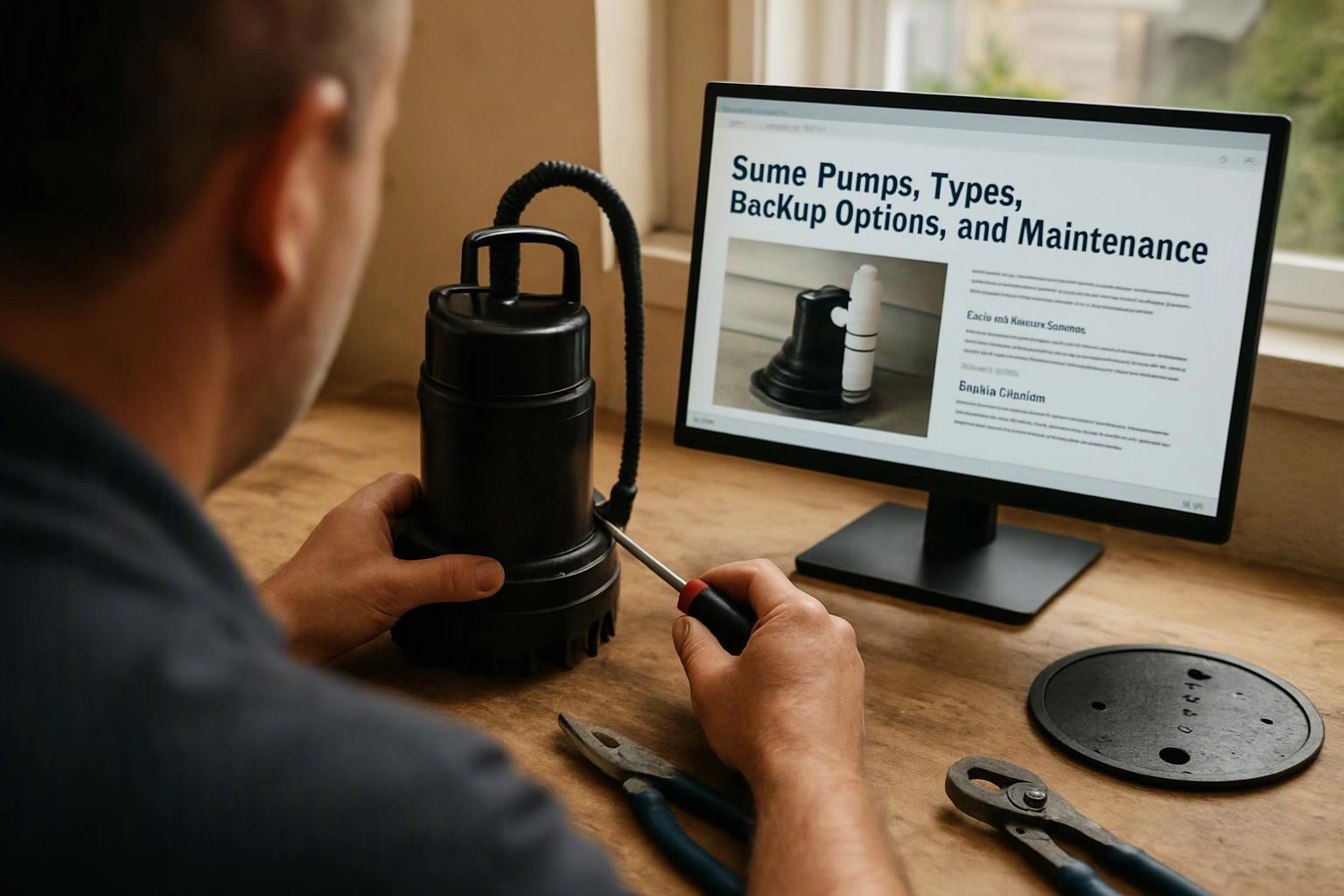
Our team checks pump capacity against the water entering the basin. We also measure the head height, which is the lift from the pump to the discharge outlet.
We inspect the discharge pipe for proper routing and secure connections. A check valve helps limit backflow after the pump stops.
We position the float switch so it can start and stop the pump without catching on the basin or piping. This helps control pump cycling and reduces avoidable wear.
When a system shows signs of failure, our Sump Pump Repair service can address the pump, switch, valve, or discharge problem.
How Do You Test a Sump Pump Safely?
A sump pump test checks power, float movement, pump cycling, and discharge without opening electrical parts.
Stop the test if the pump smells hot, sparks, or fails to move water. We handle electrical concerns and pump faults because opening protected wiring can create a shock hazard.
What Maintenance Does a Sump Pump Need?
Sump pump maintenance keeps the basin, switch, inlet, discharge line, and backup power ready for operation.
We remove debris from the sump basin and inspect the pump inlet screen. Blocked inlets can reduce water flow and make the motor work harder.
We check the float switch for free movement and inspect the check valve for proper backflow prevention. We also look for loose discharge pipe connections and restricted outlets.
Battery terminals need clean connections, and the battery condition needs regular review. A charger that cannot maintain the battery leaves the backup system unprepared.
Our routine inspection also looks for corrosion, cracks, unusual cycling, and water marks around the basin. These clues can show a problem before basement water intrusion becomes severe.
What Signs Mean a Sump Pump Needs Repair or Replacement?
A sump pump needs inspection when it fails to start, runs constantly, makes unusual sounds, or moves water poorly.
We inspect the full system before deciding on repair or replacement. A single faulty part may be serviceable, but repeated failure can point to a larger system problem.
When Should You Repair or Replace a Sump Pump?
Sump pump repair may suit an isolated switch or connection problem, while replacement may suit major motor wear or repeated failure.
Our team reviews pump age, motor wear, float switch failure, and basin condition before making a replacement decision. We also consider whether the existing discharge pipe and backup protection can support a new pump.
Replacement makes more sense when repairs keep returning or the pump cannot meet the water inflow. Repair may be practical when the basin, motor, and discharge system remain sound.
We explain what the inspection shows and what the quote includes. Cost depends on the pump type, basin access, discharge work, electrical needs, and backup options selected.
How We Install and Check Sump Pump Systems
Sump pump installation starts with a basin inspection and ends with an operational test of the complete drainage system.
We review electrical protection and plumbing connections during the installation. Work involving wiring, GFCI protection, or code and inspection requirements should be handled by our licensed team.
Questions About Sump Pump Choices and Care
Can a sump pump work without electricity?
A standard sump pump can't work without electricity, but a battery-powered backup pump can operate during an outage. A water-powered backup may work when the home has a suitable water supply and approved system design.
How do I know what size sump pump I need?
The required sump pump size depends on water inflow, head height, discharge pipe design, and basin conditions. We assess those factors together so the pump can move water without excessive cycling.
Why does my sump pump keep running?
A sump pump may keep running because water inflow is high, the float switch is stuck, the discharge pipe is restricted, or the check valve allows backflow. We inspect the basin and full discharge route before recommending a repair.
Can a sump pump and backup pump share a discharge pipe?
A sump pump and backup pump can share a discharge pipe when the piping, check valves, and discharge capacity support both pumps. We verify the layout to limit backflow and prevent one pump from sending water into the other.
What should I do if the sump pump is making a loud noise?
A loud sump pump should be inspected for vibration, loose piping, debris, bearing wear, or motor damage. Avoid opening electrical components, and contact our team if the pump also smells hot, fails to discharge water, or runs continuously.