Signs Your Toilet May Need Repair
Signs a toilet needs repair include water around the base, a weak flush, constant running, refill cycles, unusual sounds, and slow leaks. At PlumbingKentwa.link, we can inspect the toilet, identify the failed part, and explain the repair needed.
Request an EstimateWhat Signs Show That a Toilet Needs Repair?
A toilet shows warning signs when its water supply, tank parts, seal, or drain path is not working correctly. Some problems waste water, while others can lead to floor damage.
Use this list to connect each visible symptom with a possible toilet repair need. A single sign may have more than one cause, so we inspect the full fixture before choosing a replacement part.
These signs don't always mean the whole toilet needs replacement. Our Toilet Repair service focuses on finding the failed part and explaining the right fix.
Why Does a Toilet Keep Running or Refilling?
A toilet keeps running or refilling when water leaves the tank or the fill valve fails to shut off. We check the tank parts and water flow to identify the cause.
The flapper valve may be warped, dirty, or unable to close against its seat. Water then moves into the toilet bowl, and the fill valve keeps adding water to the toilet tank.
A running toilet can also have a damaged flush handle, a poorly adjusted chain, or a fill valve that cannot control the water level. A toilet that refills when unused may have a slow leak that is easy to miss without a close inspection.
Is Water Around the Toilet Base a Leak?
Yes, water around the toilet base can signal a failed seal, loose connection, or damaged toilet. We inspect the base and nearby connections before recommending a repair.
The wax ring seals the toilet to the toilet flange and helps keep wastewater inside the drain path. A failed seal can allow water to reach the floor during flushing.
Water may also come from the toilet supply line, shutoff valve, tank, or bowl. We check whether the moisture is clean supply water or sewer water because the source affects the urgency and repair plan.
Untreated water can cause floor damage around the toilet base. If you notice a sewer odor, soft flooring, or spreading moisture, stop using the toilet until we inspect it.
What Can You Check Yourself, and When Should We Repair It?
You can safely observe the toilet, check for visible moisture, and use the shutoff valve when water is spreading. Our team should handle repairs involving the wax ring, toilet flange, drain line, or hidden plumbing connection.
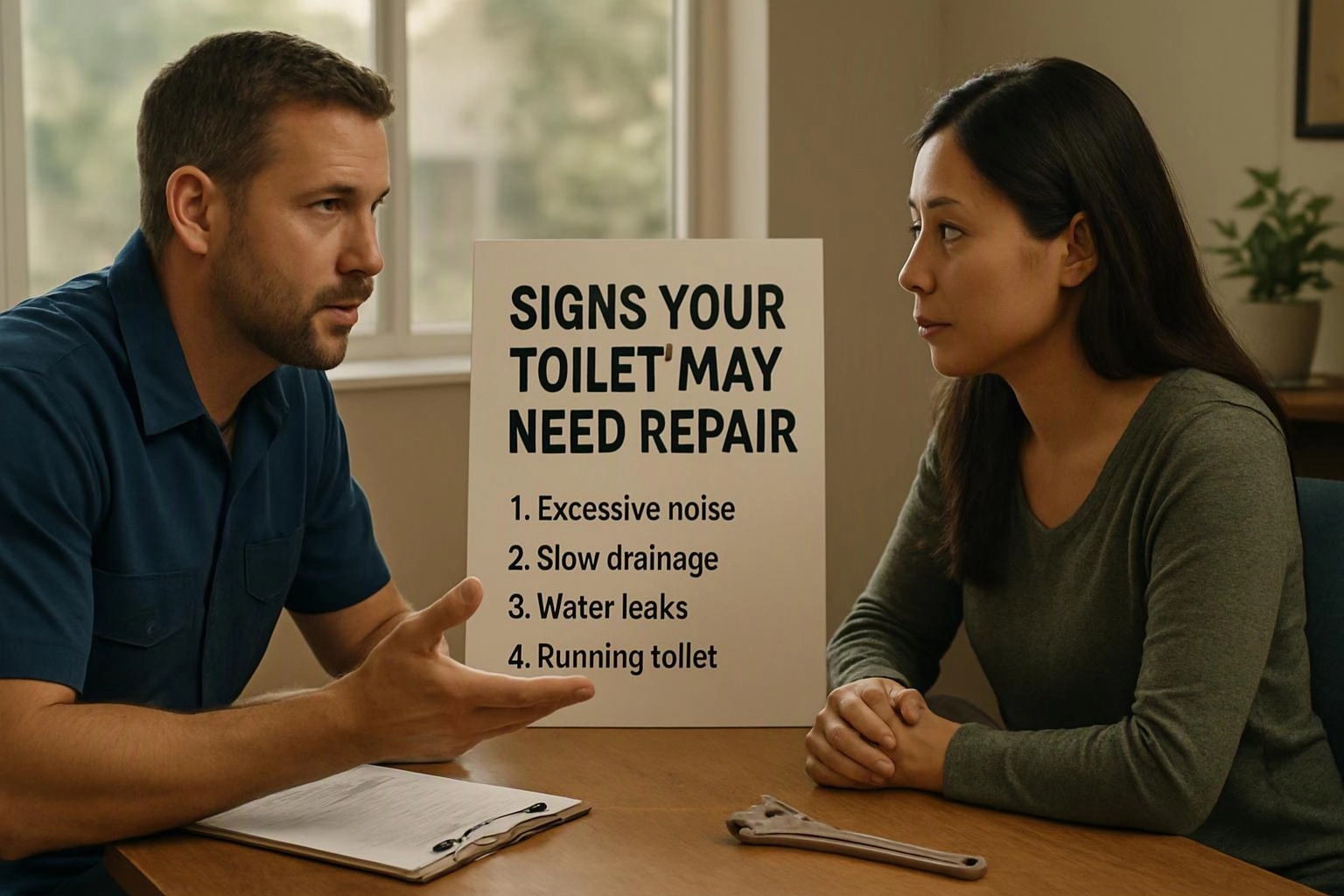
The comparison below shows where a simple observation ends and a repair inspection begins. Avoid removing the toilet or forcing a stuck valve, since those actions can worsen a leak.
| Factor | What you can do yourself | What we do |
|---|---|---|
| Visible water leak | Look around the tank, supply line, shutoff valve, and toilet base. | Trace the water source and check nearby connections for damage. |
| Running or refilling toilet | Listen for hissing or dripping and note whether the toilet refills when unused. | Inspect the fill valve, flapper valve, flush handle, and tank water level. |
| Weak flush or slow draining | Stop repeated flushing if the bowl level rises or the toilet may overflow. | Test flush performance and check the fixture and drain path for restrictions. |
| Toilet base leak | Stop using the toilet if water reaches the floor or sewer odor is present. | Inspect the toilet seal, flange, bowl, and floor area before recommending repair. |
How We Diagnose Toilet Problems
Our toilet inspection identifies whether the problem starts in the tank, bowl, seal, supply connection, or drain line. We begin with visible checks and then test the fixture under normal use.
We inspect the fill valve, flapper valve, flush handle, and toilet tank water level. We also check the toilet seal and water supply connection for signs of leakage.
During a flush test, we watch the bowl level, refill action, and flush performance. If the fixture still drains slowly, we assess whether the problem extends into the drain line.
After the inspection, we explain the failed part and the repair needed. We also identify conditions that may affect a toilet repair quote, such as damage around the floor or limited access to plumbing.
What Changes the Cost of a Toilet Repair?
The cost of a toilet repair depends on the failed part, leak location, toilet condition, and access to the plumbing. We inspect the problem and explain what the quote includes before work begins.
A replacement part may be a fill valve, flapper valve, flush handle, wax ring, or toilet supply line. A repair involving the toilet flange or floor can require more work because the fixture and surrounding connection need closer attention.
Access also matters when plumbing connections are hidden or damaged. We explain whether the quote covers the repair, the needed replacement part, and related work required to restore proper flush performance.
Contact us for an exact quote after our team inspects the toilet. The quote reflects the actual fault instead of an assumption based only on the visible symptom.
When Should a Toilet Problem Be Treated as Urgent?
A toilet problem needs prompt attention when water is spreading, the bowl may overflow, or wastewater is present. Stop using the toilet and contact PlumbingKentwa.link for an inspection.
Turn the toilet shutoff valve if you can reach it safely and water continues to enter the tank. Do not force the valve if it is stuck or begins leaking.
An active toilet leak can damage flooring and nearby materials. Sewer water, a strong sewer odor, or repeated overflow risk needs quick attention from our team.
If the toilet is overflowing, keep people away from the contaminated water and avoid repeated flushing. We can identify whether the problem involves the fixture, the toilet bowl, or the drain line.
Questions About Toilet Repair Warning Signs
Can a toilet leak without making a puddle?
Yes, a toilet can have a slow leak without leaving a visible puddle. Water may move from the tank into the bowl, or moisture may stay under the toilet base and damage the floor gradually.
Why does my toilet make a hissing or dripping sound?
A hissing or dripping toilet usually has water moving through the fill valve, flapper valve, or a leaking tank connection. We check the tank water level and each valve to find the source.
Can a weak flush mean the toilet needs repair?
Yes, a weak flush can mean the toilet needs repair. Low tank water, worn tank parts, blocked passages, or a drain restriction can all reduce flush strength.
What should I do if my toilet starts overflowing?
Stop flushing and close the toilet shutoff valve if it operates safely. Keep away from wastewater, and contact us so we can inspect the overflow cause.