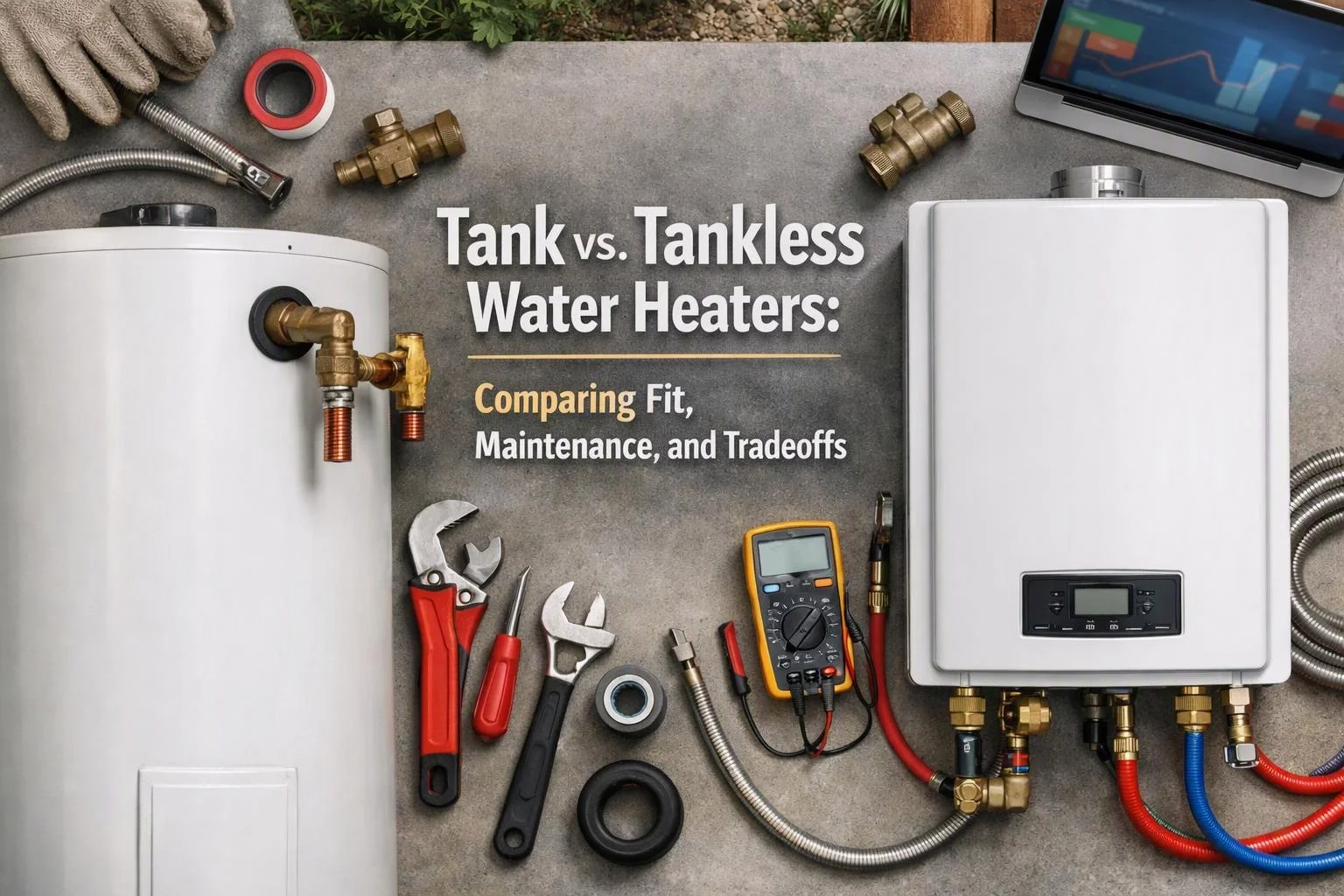
Tank vs. Tankless Water Heaters: Comparing Fit, Maintenance, and Tradeoffs
Tank water heaters store heated water for steady, familiar use, while tankless water heaters heat water on demand and save space. PlumbingKentwa.link can help match the system to household demand, installation conditions, and maintenance needs.
Request an EstimateWhat’s the Difference Between Tank and Tankless Water Heaters?
A tank water heater is a plumbing appliance that stores heated water in a storage tank. The stored hot water is ready when a fixture needs it.
A tankless water heater uses on-demand water heating. The system heats water as fixtures call for it, so it doesn't keep a full tank hot between uses. Our team can explain how each design affects your hot water supply and daily routine.
How Do Tank and Tankless Water Heaters Compare?
Tank and tankless systems differ in capacity, space needs, energy use, and service requirements. The better option depends on how your home uses hot water and what the installation can support.
| Factor | Tank water heater | Tankless water heater |
|---|---|---|
| Storage capacity | Keeps a set supply of heated water ready. | Has no storage tank and heats water during use. |
| Continuous hot water | Supply can be limited when stored water is used. | Can provide ongoing hot water when demand stays within system capacity. |
| Space requirements | Needs room for the storage tank and service access. | Usually uses less floor space but needs suitable wall space and clearances. |
| Energy use | Uses energy to keep stored water hot. | Uses energy when hot water is requested. |
| Installation requirements | Replacement may use existing water connections, fuel supply, and venting. | May need changes to the gas line, electrical capacity, venting, or water lines. |
| Maintenance | Needs tank flushing, leak checks, and inspection of internal parts. | Needs descaling and heat exchanger care. |
| Repair | Common concerns include leaks, burners, heating elements, and thermostats. | Common concerns include flow sensors, burners, controls, and mineral scale. |
Neither system is the right choice for every household. We compare the system design with your space, fuel type, and peak demand before recommending a path.
Which Water Heater Fits Your Household?
The better choice depends on household demand, available installation space, fuel setup, and preference for stored or on-demand hot water.
Households with simultaneous fixtures need enough flow rate and heating capacity to meet peak hot water use. Available space, water use patterns, and fuel type also affect the decision. Our team checks these conditions during water heater installation planning.
When Does a Tank Water Heater Make Sense?
A tank water heater can make sense when a household has predictable demand and wants stored hot water.
When Does a Tankless Water Heater Make Sense?
A tankless water heater can make sense when limited space and on-demand hot water are important priorities.
What Maintenance Does Each Water Heater Need?
Both systems need maintenance, but tank models need storage-tank care while tankless models need scale and heat-exchanger care.
Tank water heater maintenance can include tank flushing, sediment checks, anode rod inspection, burner or heating element checks, and leak inspection. Tankless water heater maintenance can include descaling, filter checks, burner inspection, and heat exchanger service.
Hard water can increase mineral scale in a tankless heat exchanger. Our team uses the system design and water conditions to plan maintenance and water heater repair.
For broader guidance on our service process, see our Water Heater Repair service page.
How Often Should a Water Heater Be Flushed?
A water heater should be flushed according to its manufacturer guidance and the sediment or mineral conditions affecting the system.
Tank water heater flushing helps address sediment buildup inside the storage tank. A tankless heat exchanger may need descaling when mineral scale affects flow or heat transfer. We follow manufacturer instructions and inspect the system before choosing the right maintenance approach.
What Are the Main Installation and Repair Tradeoffs?
Tankless installations can require different gas, electrical, venting, and water-line conditions than tank replacements.
Our water heater installation review checks the fuel supply, gas line, electrical service, venting, water lines, drain pan, and access for future service. Code and inspection requirements can also affect the installation plan.
Tankless water heater installation may need system upgrades when the existing setup cannot support the required flow rate or heating demand. We explain those conditions before work begins.
Water heater repair depends on the fault and the system type. Tankless water heater repair may involve controls or a heat exchanger, while tank repair may involve the burner, heating element, thermostat, or a leaking storage tank.
How We Help Choose and Maintain the Right Water Heater
We connect household hot water demand with the existing water heater, installation conditions, and maintenance needs.
We provide the scope of work and quote after reviewing the system and the work required. You can contact our team for a water heater assessment.
What Should You Check Before Replacing a Water Heater?
Before replacement, check the current system’s condition, household demand, fuel connection, installation space, and recurring performance problems.
Questions About Tank and Tankless Water Heaters
Can a tankless water heater run out of hot water?
Yes, a tankless water heater can stop meeting demand when the requested flow exceeds its heating capacity. The system provides on-demand water, but its flow rate and fuel supply still set practical limits.
Why does a tankless water heater need descaling?
A tankless water heater needs descaling when mineral scale builds up inside the heat exchanger. Scale can restrict water movement and reduce heat transfer, especially in hard water conditions.
Can you replace a tank water heater with a tankless model?
Yes, a tank water heater can be replaced with a tankless model when the space, fuel supply, electrical capacity, venting, and water lines support the new system. Our team checks those conditions during tankless water heater installation planning.
What causes a tank water heater to leak?
A tank water heater can leak from water connections, valves, the drain area, or corrosion in the storage tank. Our repair assessment identifies the leak source and shows whether repair or replacement fits the system’s condition.
Does hard water affect tankless water heater maintenance?
Yes, hard water can increase mineral scale inside a tankless heat exchanger. Our team uses the water conditions and system performance to plan descaling and tankless water heater repair.