Signs Your Water Heater Needs Attention
Signs a water heater needs repair include leaking water, rumbling or popping sounds, rusty water, weak hot water, and repeated shutdowns. At PlumbingKentwa.link, we can inspect the cause and explain whether repair or replacement fits the problem.
Request an EstimateWhat Signs Show That a Water Heater Needs Repair?
A water heater needs repair when leaks, unusual sounds, water changes, weak heating, or repeated shutdowns affect safe operation.
Watch for these warning signs. Some problems involve simple parts, while others point to serious tank damage.
These symptoms can overlap, so the visible sign may not reveal the real fault. Our team can trace the problem before recommending water heater repair or replacement.
Why Is the Water Heater Making Rumbling or Popping Sounds?
Rumbling or popping sounds usually mean sediment is collecting in the tank and affecting heating.
Sediment settles at the bottom of a tank water heater. The burner or heating element warms water beneath that layer, which can create bubbling and popping sounds.
Heavy buildup can reduce heating performance and place extra strain on the tank. We can inspect the tank, heating element, or burner and explain whether cleaning, repair, or replacement makes sense.
Is Water Around the Water Heater a Leak?
Water around a water heater can signal a leaking connection, valve, or tank and needs prompt attention.
A pipe connection, drain valve, or temperature and pressure relief valve can leak. Water can also come from tank corrosion, which may require water heater replacement.
Find the water shutoff valve if you can do so safely, and limit nearby water damage. Our team can inspect the source and identify whether the repair involves a fitting, valve, or storage tank.
Why Is the Hot Water Lukewarm or Running Out Quickly?
Lukewarm water or a short supply can result from a thermostat, heating component, buildup, or sizing problem.
An electric water heater may have a failing heating element or thermostat. A gas water heater may have a burner or control problem.
A damaged dip tube can mix cold water with the hot supply. Tank capacity can also affect the hot water supply, while a tankless water heater may have a flow or heating issue.
We can check the temperature setting, heating parts, dip tube, and system type. Our Water Heater Repair service focuses on the actual cause of the temperature problem.
When Should You Repair or Replace a Water Heater?
Repair usually fits a limited part failure, while replacement may fit tank corrosion, major leaks, or recurring problems.
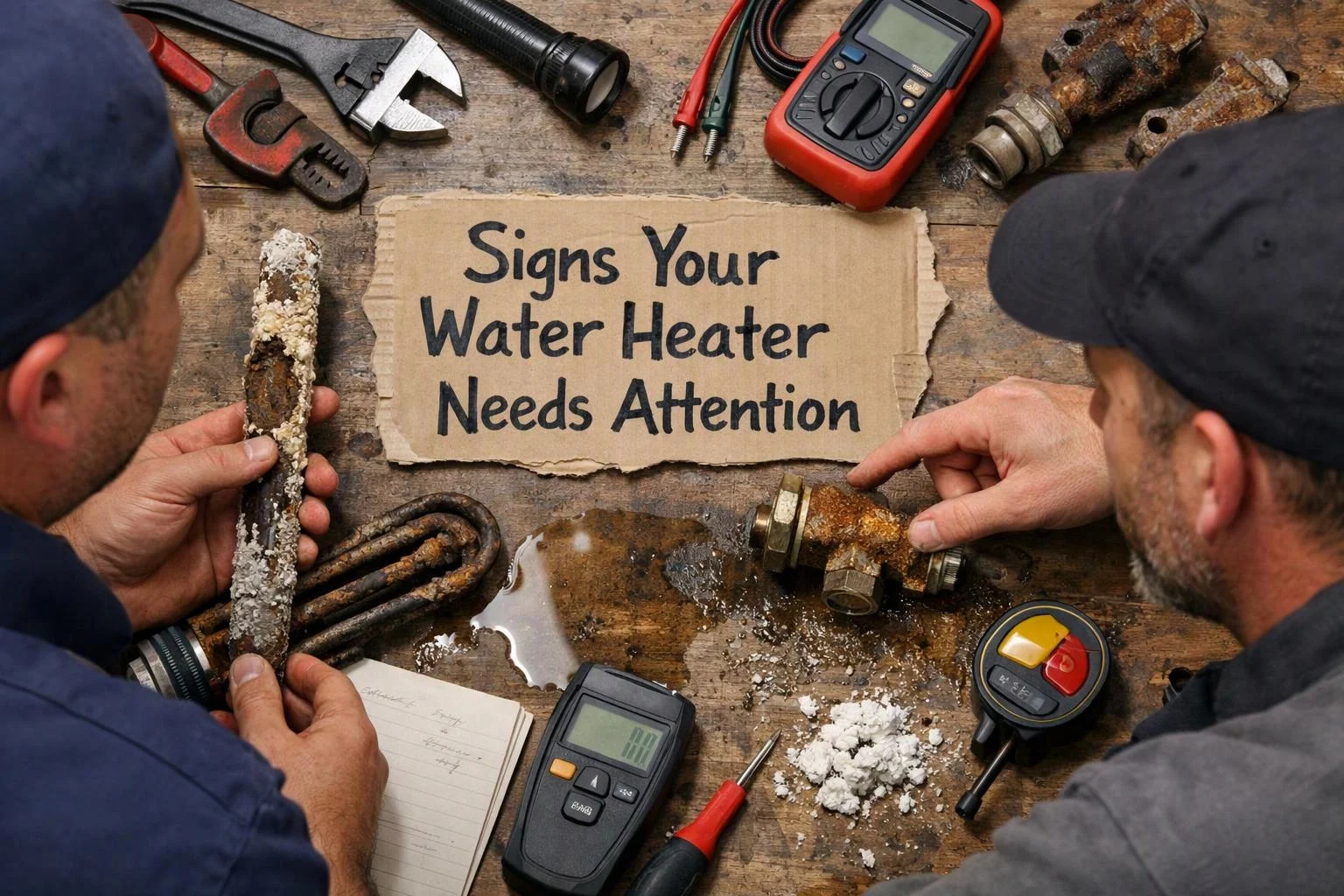
Water heater repair may suit a failed thermostat, heating element, burner, valve, or other replaceable part. The repair decision also depends on leak severity and the condition of the tank.
Tank corrosion often means the storage tank has reached a serious failure point. Repeated repair needs and rising energy use can also make water heater replacement more practical.
A tankless water heater may be a replacement option when the home’s hot water needs and installation requirements support it. We’ll compare the repair path with Water Heater Installation options and explain the tradeoffs clearly.
What Can You Check Yourself, and When Should We Help?
You can observe visible symptoms and locate the shutoff, while we diagnose faults and complete repair or installation work.
Safe observations can help us understand the water heater problem. Avoid opening gas controls, testing live electrical parts, or removing safety components.
| Factor | What you can do yourself | What we do |
|---|---|---|
| Visible leak | Look for water near fittings, the drain valve, and the tank base. | We trace the water source and assess damage. |
| Water shutoff | Locate the water shutoff valve without forcing a stuck handle. | We confirm safe isolation before repair work. |
| Temperature problem | Note whether water is lukewarm or runs out quickly. | We test the heating system and identify the failed component. |
| Owner checks | Record sounds, smells, shutdowns, and changes in water quality. | We use those details during water heater inspection and diagnosis. |
Gas, electrical, and safety-control work should be handled by our team. Call us when water is spreading, the unit smells like gas, or the heater keeps shutting down.
How We Check a Water Heater Problem
Our water heater diagnosis connects the visible symptom with the failed part or unsafe condition.
Our inspection separates a repairable component fault from tank corrosion or broader system failure. We also consider safety, water damage, and the condition of the water heating equipment.
What Does a Water Heater Repair Quote Include?
A water heater quote should explain the diagnosed problem, required parts, labor, installation work, and whether replacement is appropriate.
Our quote is based on diagnostic findings and the work needed to correct the issue. It can account for replacement parts, labor, access, connections, venting, safety controls, and other installation requirements.
When water heater replacement is the better choice, we explain why the existing unit cannot be repaired reliably. We’ll also outline the installation work needed for the selected water heater type.
Contact us for a quote after our team reviews the unit and its condition. That process gives you a clearer repair decision than judging the warning sign alone.
What Should You Do After Spotting a Warning Sign?
After spotting a serious warning sign, limit nearby water damage and contact PlumbingKentwa.link for a safe inspection.
Use the water shutoff valve if water is actively spreading and the valve is safe to reach. If you smell gas, leave the area and contact the appropriate emergency service from a safe location.
Do not open electrical panels or adjust gas controls. Our team can inspect the water heater, explain the risk, and complete water heater repair when the unit can be safely restored.
Questions About Water Heater Warning Signs
Can a water heater leak be repaired?
Yes, a water heater leak can be repaired when the source is a fitting, valve, or connection. Tank corrosion and a leaking storage tank may require water heater replacement.
What does rusty hot water mean?
Rusty hot water can mean corrosion inside the tank, a worn anode rod, or corrosion in connected plumbing. We inspect the water heater and water quality changes before recommending repair or replacement.
Is a tankless water heater worth repairing?
A tankless water heater can be worth repairing when the fault involves a serviceable component and the unit fits the home’s needs. We assess the heating failure, installation requirements, and system condition before recommending repair or replacement.