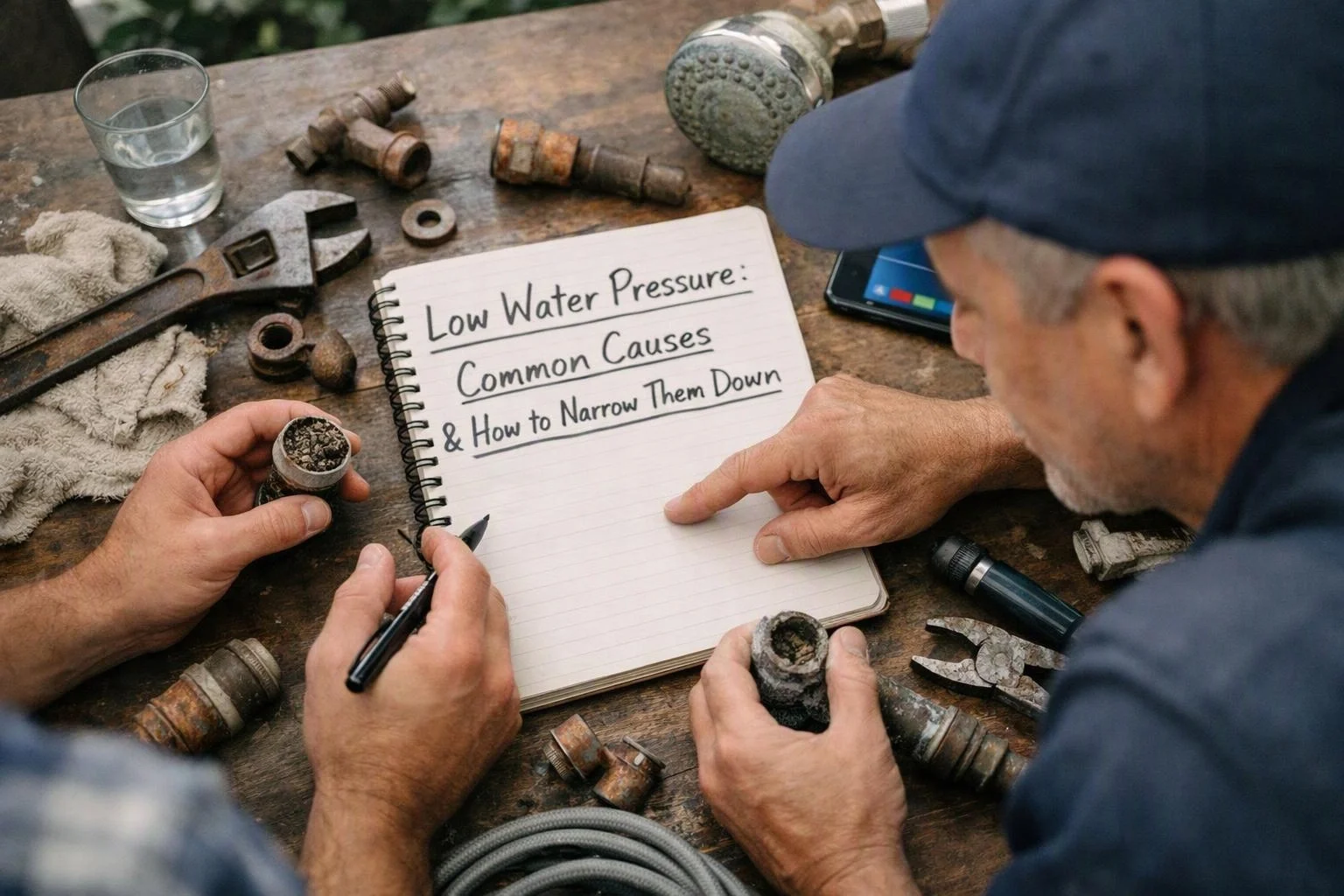
Low Water Pressure: Common Causes and How to Narrow Them Down
Low water pressure usually comes from a restricted fixture, closed valve, clogged filter, leak, failing pressure regulator, or supply problem. PlumbingKentwa.link narrows the cause by checking whether the issue affects one fixture or the whole property, then tests the related plumbing system.
Request an EstimateWhat Causes Low Water Pressure in a House?
Low water pressure in a house can come from a restricted supply, faulty valve, clogged pipe, leak, or failing pressure regulator.
The first clue is where the weak water flow occurs. A single fixture often has a local restriction, while low flow throughout the property points to shared plumbing or a water supply problem.
A partly closed shutoff valve can limit flow into a fixture or building. A failing pressure regulator can also reduce pressure across the property. Corroded pipe walls may narrow the passage, and a plumbing leak can divert water before it reaches the fixtures.
Which Causes Affect One Fixture or the Whole House?
Single-faucet pressure loss usually points to a local blockage, while whole-house pressure loss points to shared plumbing or supply conditions.
We compare several fixtures before choosing the next diagnostic step. The pattern helps separate a clogged fixture from a water main or pressure regulator problem.
| Pattern | Likely causes | What we check |
|---|---|---|
| Single-faucet pressure loss | Aerator, cartridge, supply stop, or supply line restriction | Fixture condition and local flow path |
| Shower pressure loss | Showerhead blockage, cartridge issue, or supply restriction | Showerhead and valve performance |
| Whole-house pressure loss | Water main, pressure regulator, filter, leak, or shared pipe fault | Supply path, pressure, valves, and property-wide flow |
Why Is Water Pressure Low at Only One Faucet?
Low pressure at only one faucet usually comes from a clogged aerator, restricted supply stop, blocked cartridge, or damaged supply line.
A faucet aerator can collect sediment and create restricted flow at the outlet. Sediment can also affect the faucet cartridge or the flexible supply line beneath the fixture.
We compare the affected faucet with nearby fixtures and inspect the local shutoff parts. That comparison helps us avoid treating a single-fixture fault as a whole-house plumbing problem.
Can a Plumbing Leak Cause Low Water Pressure?
Yes, a plumbing leak can reduce available pressure when escaping water limits flow through the system.
A hidden leak may occur at a pipe joint, inside a wall, below a floor, or near the water meter. Unusual moisture, water damage, damp smells, or sounds near closed fixtures can support that concern.
Our Leak Detection process follows the pressure pattern and visible signs. We look for the source before recommending repair work.
Can a Whole-House Water Filter Reduce Water Pressure?
Yes, a whole-house water filter can reduce pressure when its cartridge is clogged, its housing restricts flow, or the system isn't sized correctly.
Sediment buildup can block a filter cartridge and create a noticeable flow restriction. A damaged filter housing or poor system match can also affect pressure across the property.
We check the filter condition, housing, bypass position, and pressure before recommending filter replacement. If the equipment no longer meets the property's demand, we can discuss water filtration system installation options.
How We Narrow Down the Cause of Low Water Pressure
Our plumbing inspection follows the pressure pattern from the affected fixture back toward the supply.
We use fixture comparison and pressure testing to separate a local restriction from a larger plumbing fault.
What Low Water Pressure Signs Need Prompt Plumbing Attention?
Sudden pressure loss with leaking, damp areas, pipe noise, or water damage needs prompt attention from our team.
Rust-colored water can signal pipe corrosion or disturbance inside older plumbing. An active leak can damage surrounding materials and reduce flow to several fixtures.
A water heater may also be involved when only hot-water pressure is low. We check the related supply path and equipment before recommending the next repair.
When Low Water Pressure Calls for Pipe or Equipment Repair
Low water pressure calls for repair when testing confirms a damaged pipe, failing valve, faulty regulator, filter restriction, or water heater fault.
Pipe repair may be needed when corrosion, a leaking joint, or a damaged supply line limits flow. A pressure regulator or shutoff valve may need service when the shared supply is restricted.
Water heater repair fits a hot-water pressure problem tied to the heater or its connections. Leak detection and water filtration system installation address different causes, so our recommendation follows the test results.
We explain the finding, the repair scope, and the parts involved before preparing a quote. The final cost depends on access, the failed component, and the condition of connected plumbing.
Questions About Low Water Pressure Causes
Why does my water pressure drop when another fixture runs?
Water pressure can drop when another fixture runs because the shared supply has limited flow or a restriction. A partially closed valve, failing pressure regulator, clogged filter, corroded pipe, or supply problem can make the drop more noticeable.
Why is hot water pressure lower than cold water pressure?
Hot-water pressure can be lower than cold-water pressure because the water heater supply, connection, valve, or internal passage is restricted. Sediment or a failing component may affect hot water while cold water remains normal.
Can old pipes cause low water pressure?
Yes, old pipes can cause low water pressure when corrosion or mineral buildup narrows the inside passage. Our pipe inspection helps determine whether a local repair or broader pipe repair is appropriate.
What does sudden low water pressure mean?
Sudden low water pressure can mean a new leak, failed valve, blocked filter, pressure regulator fault, or water main issue. The safest next step is a plumbing inspection when the change affects several fixtures or appears with water damage.
When testing identifies a plumbing fault, we explain the repair path and what the quote covers.
Get a Free Estimate