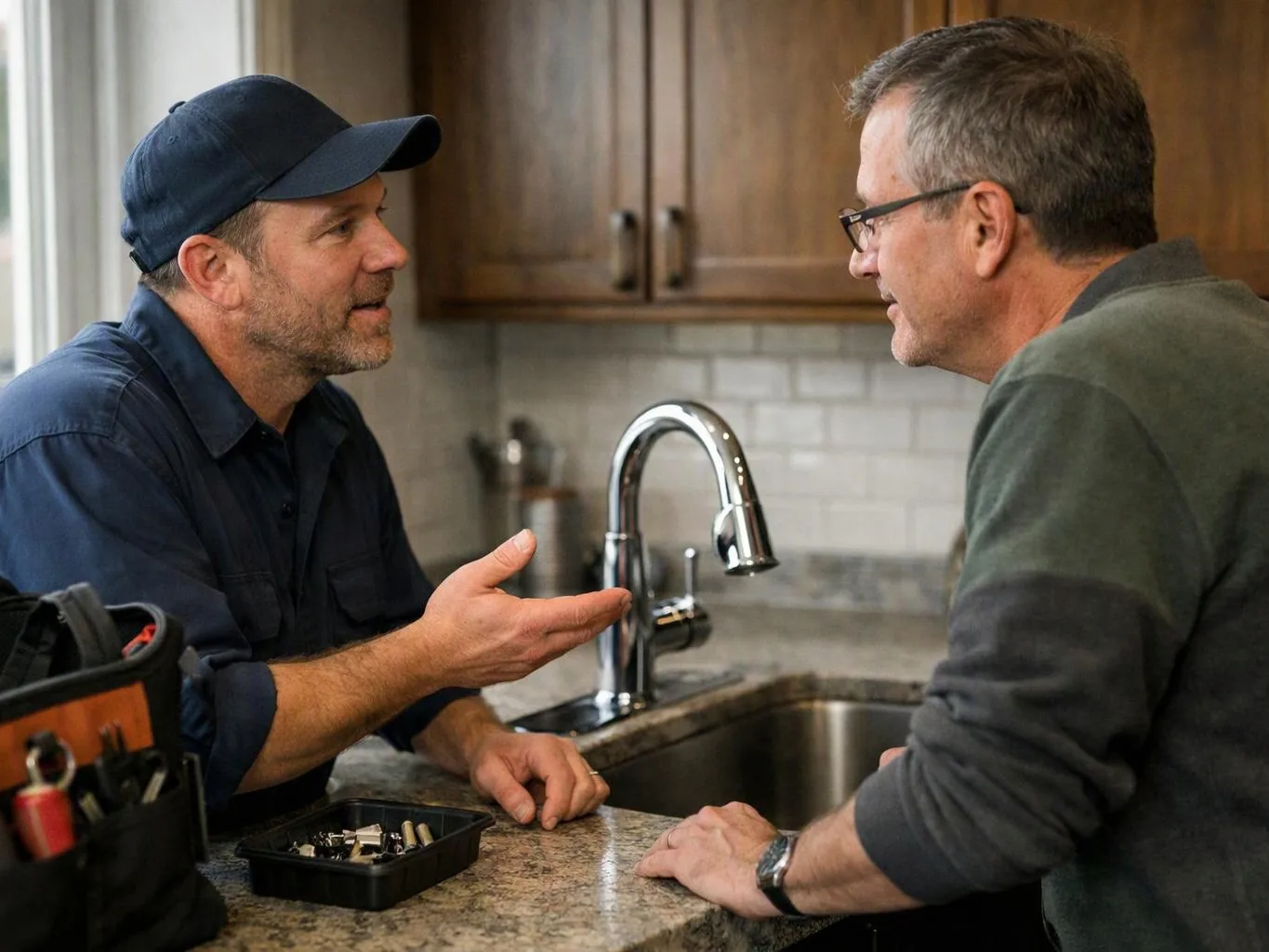
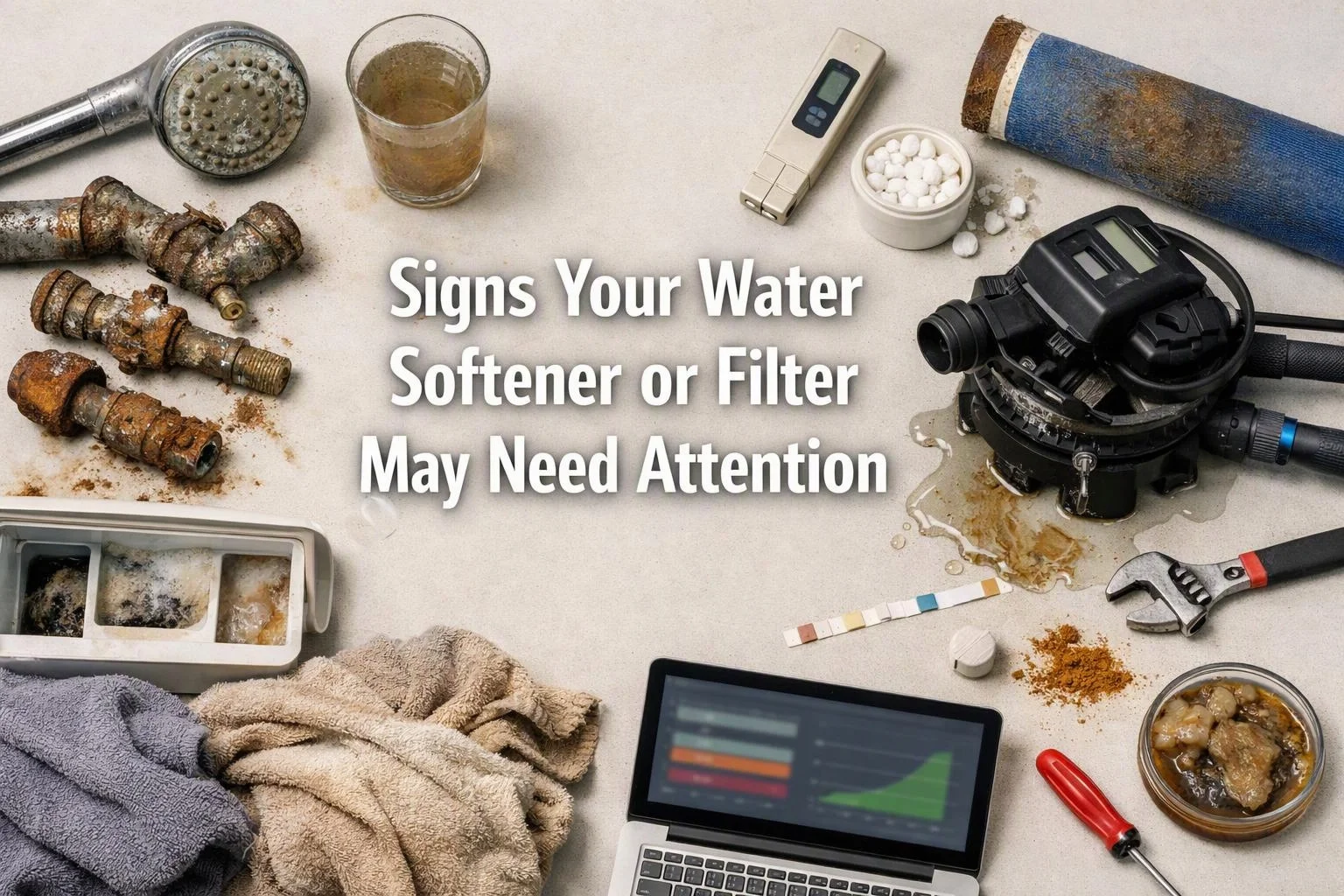
Signs Your Water Softener or Filter May Need Attention
A water softener or filter may need attention when water develops scale, spots, poor taste, unusual odor, low flow, or changes in feel. PlumbingKentwa.link can inspect the system, identify the cause, and explain whether repair, maintenance, or replacement fits the problem.
Request an EstimateWhat Are the Warning Signs Your Water Softener or Filter Isn't Working?
Water treatment equipment may not be working when water quality, surface buildup, flow, or system behavior changes. These signs can point to a softener problem, a filter problem, or an issue with the plumbing connections.
Our team uses the reported symptom to guide the inspection. We look at the system as a whole, because one change can have more than one possible cause.
Why Are There Spots on Dishes and Scale Around Faucets?
Hard water can leave mineral deposits on dishware and create scale around faucets. Spots on dishes and scale around faucets usually point to minerals remaining in the water or a softener that isn't reducing hardness properly.
A water softener may have a control problem, a blocked path, or a problem with its treatment media. The faucet aerator can also collect debris, which may affect the stream even when the larger system works properly.
We check the softened water, the softener settings, and nearby plumbing connections. That helps separate a water softener problem from a fixture-level buildup issue.
What Are Signs a Water Filter Needs to Be Changed?
A water filter may need changing when filtered water tastes or smells different, flow drops, or the cartridge reaches its service limit. A filter can need attention even when the water still looks clear.
Check the filter label, service instructions, and visible condition of the cartridge. Do not force a stuck filter housing, and stop if the housing leaks after service.
Why Does Filtered Water Taste or Smell Different?
Filtered water can taste or smell different when the cartridge is exhausted, installed incorrectly, damaged, or no longer suited to the water problem.
An activated carbon filter can lose performance as it becomes loaded with impurities. A loose seal or incorrect installation can also allow water to bypass the cartridge.
Water contamination can have causes outside the filter, so a water quality change deserves careful attention. We inspect the filter cartridge, housing, connections, and treatment purpose before recommending filter replacement.
What Can You Check Yourself, and When Should We Inspect the System?
You can check visible settings, leaks, the bypass position, and filter condition, while we check system operation and plumbing connections. Simple observations can help us understand the problem, but internal repairs should be handled by our team.
Do not open pressurized equipment or alter electrical controls. Shut off the water supply if a leak is growing, then contact us for a safe inspection.
| Factor | What you can do yourself | What we do |
|---|---|---|
| Visible condition | Look for leaks, cracks, wet areas, or unusual residue. | We trace the leak and check connected components. |
| Bypass valve | Confirm the bypass valve has not been moved accidentally. | We verify the valve position and water path. |
| Filter condition | Check the cartridge label and visible housing condition. | We check seals, flow restrictions, and housing operation. |
| Water pressure | Note whether low flow affects one fixture or the whole home. | We assess pressure and identify restrictions in the system. |
How We Diagnose a Water Softener or Filter Problem
System inspection starts with the reported symptom and the water treatment goal. We check the plumbing connections, control valve, resin tank, filter housing, and related components.
We look for blocked paths, bypass conditions, leaks, failed controls, and signs of improper installation. Water quality testing may help when taste, odor, or hardness does not match the equipment setting.
Our team explains whether the issue calls for maintenance, water softener repair, filter replacement, or replacement equipment. We also explain what the recommended work includes before proceeding.
When Does a Water Softener or Filter Need Repair?
A water softener or filter needs repair when inspection finds a failed component, leak, blocked filter path, control problem, or connection issue.
Leaking equipment can damage nearby materials and should not be ignored. Failed regeneration, low water flow, and damaged fittings can also reduce treatment performance.
We may recommend water softener repair when the existing equipment can be restored safely. We discuss a replacement system when the equipment condition or treatment goal makes repair unsuitable.
Our team can also explain the repair path through water softener repair.
DIY Checks vs Calling PlumbingKentwa.link
Homeowner checks can identify visible problems, but plumbing inspection is needed when the cause is unclear. Water softener repair and Water Filtration System Installation involve pressurized plumbing and should be assessed by our team.
The right choice depends on the symptom, the equipment condition, and whether the issue affects one fixture or the whole home.
| Factor | What you can do yourself | What we do |
|---|---|---|
| Settings | Review the displayed settings without changing unfamiliar controls. | We test the control valve and operating cycle. |
| Leaks | Observe the equipment and shut off water if a leak worsens. | We locate the source and repair the affected connection or component. |
| Flow problems | Compare flow at nearby fixtures. | We check restrictions through the filter housing and plumbing system. |
| New equipment | Gather the equipment model and water quality concerns. | We assess fit, connections, and treatment needs for installation. |
How to Get the Right Fix for Your Water Quality Problem
The right fix depends on the water symptom, equipment condition, installation, and treatment goal. We assess the system before recommending repair, replacement, or Water Filtration System Installation.
A water filter supplier or water softening equipment supplier may offer equipment, but correct selection also depends on the existing plumbing and water problem. Our team checks those details so replacement equipment matches the system.
We explain the diagnosis, the work involved, and the factors that affect the quote. Contact us through our contact page to arrange an assessment.
Get a Free EstimateQuestions About Water Softener and Filter Problems
Can a water softener stop working without making noise?
Yes, a water softener can stop reducing hardness without making unusual noise. Spots, scale, changed water feel, or a failed regeneration cycle may reveal the problem.
Can a clogged filter reduce water pressure throughout the house?
Yes, a clogged whole-house filter can reduce water flow throughout the home. We check the cartridge, housing, bypass path, and plumbing connections.
Should I replace a water filter if the water still looks clear?
Yes, clear water can still pass through an exhausted filter. Use the cartridge service guidance and consider taste, odor, flow, and housing condition.
What should I do if my water softener is leaking?
Turn off the water supply if the leak is growing, protect nearby materials, and contact us for an inspection. Do not open pressurized parts or alter electrical controls.
Related Resources
Water Softener or Filtration System: Choosing Equipment for Your Home
Everything About ItWater Softeners and Filters: Which System Addresses Your Water Concerns?
Brand vs BrandWater filter supplier Companies Worth Comparing in Kent (2026)
Brand vs BrandSnoFalls Plumbing LLC vs Local Water filter supplier Alternatives in Kent: Side-by-Side Comparison