Whole-House Repiping: Signs, Material Choices, and What to Expect
Whole-house repiping replaces failing water supply pipes throughout a home when repairs no longer provide a reliable solution. At PlumbingKentwa.link, we assess pipe condition, explain material choices, and plan the right replacement scope.
Request an EstimateWhen Does a House Need Whole-House Repiping?
Whole-house repiping may be needed when widespread pipe failure makes repeated repairs unreliable or disruptive.
Corroded pipes can develop recurring leaks, scale buildup, and discolored water. Low water pressure can also point to restricted or damaged supply piping. The pipe material, plumbing layout, and pattern of failures help determine whether replacement makes sense.
Warning Signs That Point to Widespread Pipe Problems
Widespread pipe problems usually show through repeated symptoms across more than one plumbing fixture.
Can You Repipe Only Part of a House?
Partial repiping can fit localized damage, but widespread deterioration may make whole-house replacement more dependable.
We may consider branch line replacement when damage stays in one area. A main water line problem can require a different scope from interior supply pipe work. The plumbing layout, pipe material, and future repair risk guide that decision.
Partial work can reduce access needs when the remaining pipes are sound. It can also leave older sections that may need attention later, so our assessment focuses on the condition of the entire water supply system.
Which Pipe Materials Are Used for Home Repiping?
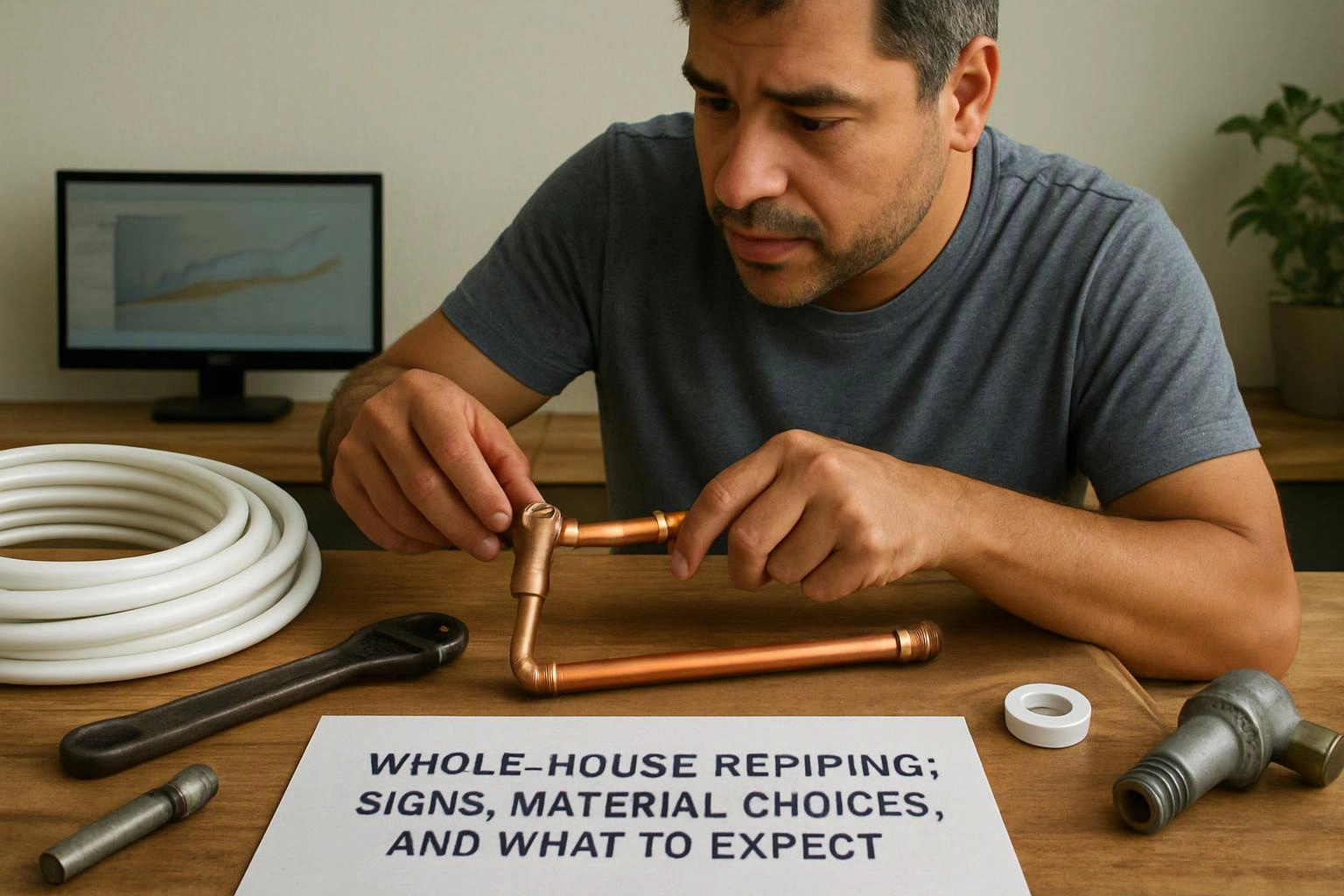
Home repiping commonly uses PEX, copper, or CPVC for potable water piping.
Material selection depends on water temperature, pipe connections, access conditions, and building code requirements. We also consider how the material fits the home’s existing plumbing layout.
| Material | Common strengths | Planning considerations |
|---|---|---|
| PEX | Flexible tubing that can simplify routing through difficult spaces. | Connections, heat limits, and code requirements must suit the installation. |
| Copper | Rigid piping with strong durability and heat tolerance. | Corrosion conditions and access can affect installation choices. |
| CPVC | Lightweight piping suited to many residential water systems. | Water temperature, pipe connections, and building code still need review. |
How Do Common Repiping Materials Compare?
PEX, copper, and CPVC each suit different homes, water conditions, budgets, and installation constraints.
PEX flexibility can help when wall access is limited or routing requires fewer rigid turns. Copper offers durability and heat tolerance, but access conditions may make installation more involved. CPVC can work well in suitable residential systems when temperature and connection requirements are met.
Corrosion resistance matters when existing water conditions have damaged metal piping. Our material selection also accounts for crawl space access, attic routes, slab foundation limits, and the required pipe connections.
What Does the Whole-House Repiping Process Include?
A whole-house repiping process starts with a plumbing inspection and ends with testing and required checks.
Our team plans the work around the home’s water supply layout and access conditions. We explain the material selection and replacement scope before installation begins.
What Changes the Scope of a Repiping Project?
Repiping scope depends on pipe access, the plumbing layout, the number of fixtures, and the condition of connected lines.
Home size and fixture count affect the amount of water supply piping involved. Wall and ceiling access can change how the crew reaches concealed lines. Crawl spaces and attics may provide useful routes, while a slab foundation can limit access.
The water shutoff location also affects planning. Surface restoration may be needed when walls or ceilings must be opened. We include access conditions and connected fixture work when defining the replacement scope.
How We Plan a Whole-House Repiping Project
We plan whole-house repiping through a home plumbing inspection, supply layout review, and written scope.
Our team checks visible pipes, fixtures, shutoff valves, access points, and signs of water damage. We use those findings to explain repiping options and identify work that may affect fixture reconnection or surface restoration.
Our Whole House Repiping service planning includes the proposed materials, access needs, testing, inspection requirements, and the work included in the quote.
What Should You Check Before Choosing a Repiping Plan?
A repiping plan should clearly show what will be replaced, how the work will be accessed, and how the system will be checked.
Use the following checklist when reviewing the proposed work with our team.
How Can Homeowners Prepare for Repiping?
Homeowners can prepare by clearing plumbing access areas, planning for temporary water interruption, and protecting nearby belongings.
Clear access around fixtures, cabinets, crawl spaces, attics, and other plumbing areas. Move belongings away from walls and ceilings where access may be needed. Plan household water use around the scheduled water shutoff.
Keep fixture areas available for reconnection and testing. After installation, our team completes leak testing and checks the water supply system before normal use resumes.
Questions About Whole-House Repiping
Is whole-house repiping disruptive to a home?
Yes, whole-house repiping can disrupt areas where supply pipes need access. The amount of disruption depends on wall access, ceiling access, crawl spaces, attic routes, and the plumbing layout. We plan access points and surface restoration needs before work begins.
What happens to fixtures during a whole-house repipe?
Fixtures are disconnected as needed and reconnected after the new supply pipes are installed. We check fixture connections and test for leaks before the system returns to normal use.
Does a whole-house repipe include the main water line?
A whole-house repipe may include the main water line when that line is part of the approved replacement scope. We inspect the main supply line separately and explain whether it connects to the interior repiping plan.
What should a repiping quote include?
A repiping quote should identify the replacement scope, pipe material, access work, fixture reconnection, testing, and inspection requirements. We prepare a quote after reviewing the home’s pipe condition, plumbing layout, and access needs. You can request an exact quote through our contact page.