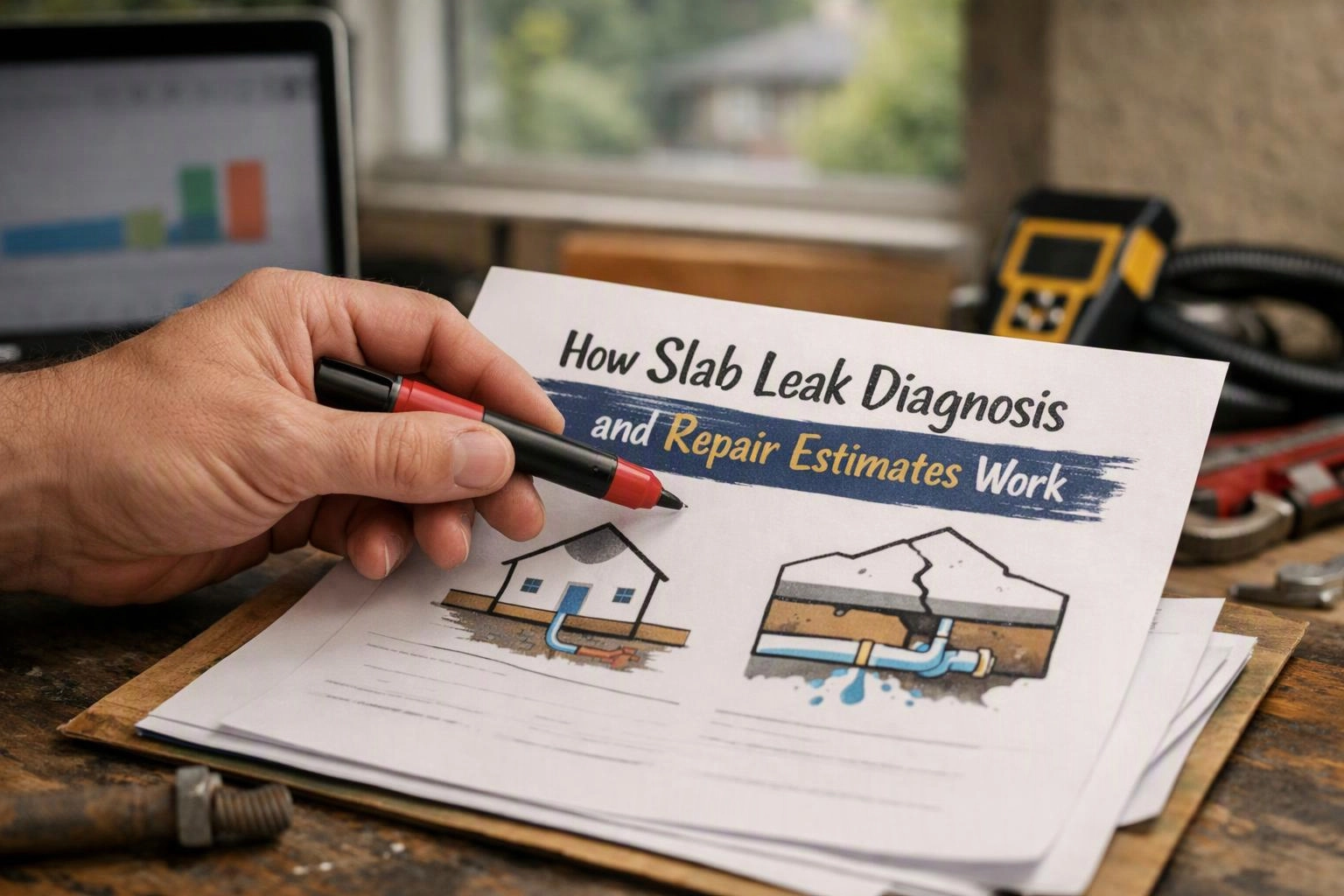
How Slab Leak Diagnosis and Repair Estimates Work
Slab leak diagnosis identifies the leak path, pipe condition, and access needs before repair costs are estimated. At PlumbingKentwa.link, we explain what we inspect, what the estimate covers, and how to prepare.
Request an EstimateWhat Slab Leak Detection Involves
Slab leak detection involves tracing water loss, checking visible signs, and narrowing the leak location before opening the floor. A slab leak is a hidden water leak beneath or within a concrete slab.
We look for signs such as damp flooring, a warm floor, cracked flooring, moisture damage, or the sound of running water. A change in the water bill or water pressure can also support the diagnosis.
The affected water supply pipe may be under the concrete slab, so the leak location must be narrowed carefully. Our Leak Detection service helps guide the repair plan and limit unnecessary concrete access.
How We Diagnose a Slab Leak
Our team diagnoses a slab leak by confirming the leak, tracing its path, and planning safe access before repair. We choose testing methods based on the signs found during the diagnostic inspection.
These steps help separate a slab leak from a fixture leak, drain problem, or visible supply line issue. We explain the findings before recommending slab leak repair.
What We Check Before Preparing the Estimate
A slab leak repair estimate covers the confirmed leak location, pipe condition, access work, repair method, and restoration needs. We review each item so the written estimate matches the planned work.
| Inspection area | Why it matters to the estimate |
|---|---|
| Leak location | The location guides the access opening and pipe repair plan. |
| Pipe material and condition | The pipe condition helps determine whether a local repair or broader work fits. |
| Concrete slab | The slab affects concrete access, cutting, removal, and safe work planning. |
| Floor covering | Tile, wood, carpet, or another surface can change the restoration needs. |
| Repair access | Tight or difficult access can change how the repair area is reached. |
| Water damage | Moisture damage may require added drying, protection, or surface restoration work. |
We also consider whether the leak is a hot water slab leak or a cold water slab leak. The test results and pipe condition help us choose the repair method.
What Changes a Slab Leak Repair Estimate
The main cost drivers are the leak location, pipe damage, access difficulty, repair method, and surface restoration. Each slab leak repair has its own scope because the pipe and surrounding floor can differ.
A small, reachable repair area may need less concrete removal than a difficult access point. Floor restoration can also vary with the floor covering and the amount of moisture damage.
We may discuss direct pipe repair, rerouting, or whole-house repiping when the pipe condition supports those options. Our estimate explains why each option fits the leak assessment.
To obtain an exact quote, contact us for a diagnostic inspection. We prepare the repair estimate after reviewing the leak location, access plan, pipe condition, and restoration needs.
How We Move From Detection to Repair
Leak detection identifies the problem, while slab leak repair addresses the damaged pipe and related access work. We connect the test findings to a clear repair scope.
Our written estimate describes the repair method, pipe access, concrete work, and surface restoration that we expect to perform. We also explain any repair options that may suit the pipe condition.
Leak detection doesn't include every repair automatically. Detection establishes the leak location and repair needs, while pipe repair or slab leak repair is completed after you approve the written scope.
How to Prepare Before We Inspect the Slab Leak
Homeowner preparation can help the inspection by protecting belongings, clearing access, and recording when symptoms appear. You can also tell us about past plumbing work and unusual water use.
Don't break concrete or remove flooring before our inspection. Unplanned access can hide useful signs and make the repair scope harder to confirm.
What to Expect After the Estimate
After diagnosis, we explain the repair scope, access plan, and factors that shape the estimate before work begins. You can review how the pipe repair connects to the leak findings.
We discuss available repair options and explain the expected concrete access and floor restoration needs. Estimate approval confirms the work plan before slab leak repair starts.
If the inspection shows wider pipe concerns, we explain why rerouting or whole-house repiping may be considered. The final plan follows the confirmed pipe condition and the access needs.
Contact us through our contact page to arrange an inspection and request a written estimate.
Questions About Slab Leak Estimates
Does leak detection include slab leak repair?
Leak detection identifies the leak and guides the repair plan, but slab leak repair is approved as its own work scope. We explain the pipe repair, access work, and restoration needs in the written estimate.
Can a slab leak be repaired without opening the floor?
A slab leak can sometimes be addressed without opening the floor when rerouting provides a suitable path. We choose between direct access and a reroute after checking the leak location and pipe condition.
What should I do if I suspect a slab leak before inspection?
If you suspect a slab leak, protect belongings, clear the area, and record the signs you observe. You can use the water shutoff if you can operate it safely, but don't open the concrete before inspection.
Why can two slab leak repairs need different access plans?
Two slab leak repairs can need different access plans because the leak location, pipe condition, concrete slab, and floor covering may differ. We use those findings to plan the safest practical route to the damaged pipe.