Slab Leak Detection: Warning Signs, Testing, and Repair Choices
Slab leak detection uses water-use clues, pressure checks, acoustic tools, thermal imaging, and camera inspection to locate hidden pipe leaks. PlumbingKentwa.link uses the findings to explain repair choices before concrete is opened.
Request an Estimate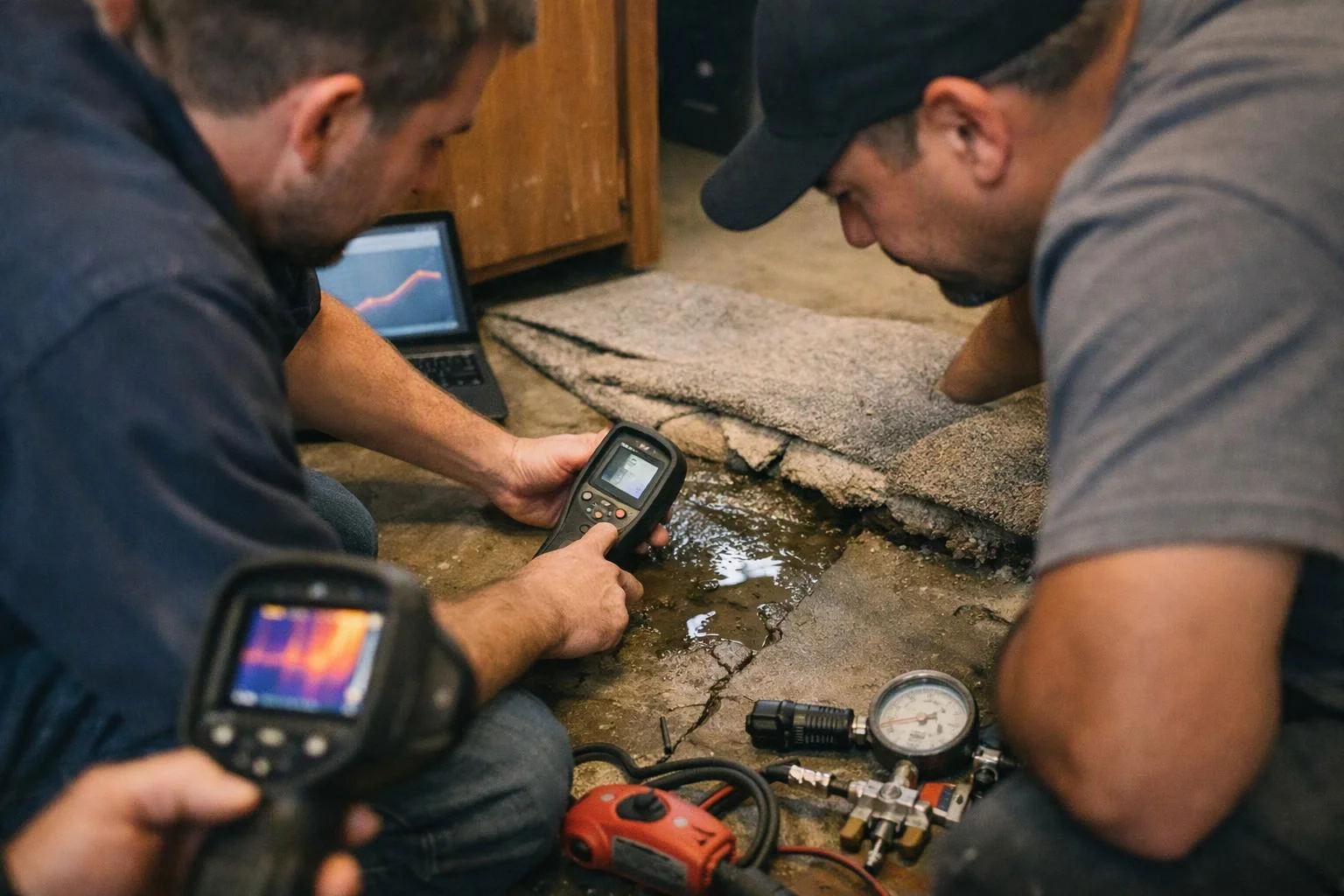
What Is Slab Leak Detection?
Slab leak detection is a plumbing inspection that identifies and locates hidden plumbing leaks beneath concrete slabs. A slab leak can occur when a water supply pipe or another plumbing pipe leaks below the concrete slab.
Our team checks the plumbing system before concrete access is planned. We use the leak location and test results to explain the safest repair path.
Under-slab leak detection helps us detect a hidden water leak without opening large areas at random. The process can also show whether moisture comes from a water line leak, a fitting, or another source.
What Are the Warning Signs of a Slab Leak?
Common slab leak signs include unexplained water use, warm flooring, and moisture that has no clear source. These clues don't prove a leak, but they show that the plumbing system needs checking.
Water damage may not always appear at the leak location. Moisture can travel through flooring, soil, or building materials before it becomes visible.
How Do We Test for a Slab Leak?
Slab leak detection starts with visible clues and water-system checks, then uses targeted tools to locate the leak without unnecessary concrete removal.
Our team chooses the next test from the first findings. Each step helps narrow the leak location and the likely repair access point.
These methods support a focused water damage assessment. Our team records the findings before recommending repair under concrete.
For broader plumbing inspection needs, our Leak Detection service explains how we investigate hidden water problems.
Can a Slab Leak Be Detected Without Breaking Concrete?
Yes, slab leak detection can often locate the problem without breaking concrete, although limited access may still be needed for confirmation or repair.
Non-destructive testing uses pressure checks, acoustic leak detection, thermal imaging, and electronic sensors. These tools help our team narrow the leak location before concrete access is considered.
Some leaks still need a small access opening for direct inspection or pipe repair. Our team uses the test results to keep that opening focused and protect nearby flooring where possible.
Which Repair Choice Fits the Slab Leak?
The right repair depends on the leak location, pipe condition, access, water damage, and the long-term condition of the plumbing line.
Our team compares the repair options after detection. The table shows how each choice generally fits different findings.
| Repair choice | When it may fit | Main planning point |
|---|---|---|
| Spot repair | A single leak has a clear location and the surrounding pipe remains sound. | The access opening stays focused on the damaged section. |
| Pipe rerouting | The existing route has repeated problems or is difficult to access. | The new route must connect safely to the existing plumbing line. |
| Pipe replacement | Pipe damage or poor pipe condition affects a larger section. | The repair scope includes compatible materials and proper connections. |
| Trenchless repair | The pipe and site conditions support repair with limited surface disruption. | The line must be suitable for the selected repair method. |
Concrete access may still be needed for a spot repair, replacement, or connection. Our team explains how the leak location and pipe condition shape the recommendation.
How Do We Plan Slab Leak Repair?
Our team plans slab leak repair from the leak report, repair scope, and confirmed access needs. We review the pipe repair method before concrete is opened.
We identify the water shutoff point and explain how the water supply will be controlled during the work. We also discuss flooring protection and the likely concrete access area.
The repair plan connects the leak location to the work area. It also separates plumbing repairs from surface restoration so the written scope stays clear.
What Changes the Cost of Slab Leak Repair?
Slab leak repair cost changes with the leak location, pipe condition, access method, surface restoration, and repair scope; we explain those factors in the quote.
Leak location affects how much concrete access may be needed. Pipe material and pipe damage affect the repair method and compatible fittings.
Floor covering and water damage can add restoration work after the plumbing repair. Our team includes the known access, protection, plumbing, and restoration details in a written repair quote.
Contact our team through our contact page to request an exact quote based on the inspection findings.
When Should You Arrange Slab Leak Detection?
Arrange slab leak detection when unexplained moisture, running-water sounds, pressure loss, or warm flooring suggests a hidden plumbing leak.
An active leak can increase water damage and mold risk if it continues. Foundation moisture can also spread beyond the first visible area.
If you suspect a leak, limit water use and use the water shutoff when it can be done safely. Then contact our team for an urgent plumbing assessment, especially when water is actively spreading.
Questions About Slab Leak Detection
Can a slab leak cause mold or mildew?
Yes, a slab leak can cause mold or mildew when hidden moisture remains near flooring or building materials. Our team checks for moisture signs and includes water damage in the repair assessment.
Does a slab leak always cause visible water damage?
No, a slab leak doesn't always cause visible water damage. Moisture can remain below the surface or travel before it reaches flooring, walls, or other visible areas.
What should I do if I suspect a leak under my concrete floor?
If you suspect a leak under your concrete floor, limit water use and arrange a plumbing assessment. Our team can check the water meter, water pressure, moisture clues, and likely leak location before recommending concrete access.