Skip to content

Leak Detection in Bellevue, Washington

Musty odors need prompt plumbing attention in Bellevue because hidden moisture can spread behind finished surfaces. We trace the source and explain the repair options.

5 · 13 ReviewsLicensed & InsuredWarranty AvailableSame-Day Service

Quick Summary: Hidden Leak Checks in Bellevue, Washington

Leak Detection in Bellevue connects musty odors, wall stains, mold growth, and water meter movement to concealed plumbing leaks. PlumbingKentwa.link provides this service for homeowners and businesses across Kent and nearby South King County communities, including Renton, Auburn, Federal Way, Covington, and Des Moines.

  • What we do: PlumbingKentwa.link provides Leak Detection for Bellevue, Washington properties with signs of concealed water loss.
  • What is included: We check visible moisture signs, trace likely plumbing paths, assess fixtures and piping, and explain repair needs.
  • What you get: The customer receives a clearer source diagnosis and a practical decision about repair, replacement, or further inspection.

Why do musty odors keep returning after cleaning?

Musty odors often return when hidden moisture remains behind a wall, below flooring, or near a leaking fixture. Leak detection checks the plumbing source, nearby surfaces, and water use pattern. Drying or cleaning alone won't solve the issue if a supply line, drain connection, or pipe joint still leaks.
Our Track Record

Average Rating
5
Customer Reviews
13

Leak Detection for Bellevue Properties

Leak detection focuses on the buyer who sees a symptom but can't locate the source. A damp wall, recurring stain, mold growth, or moving water meter can point to a supply line, drain pipe, fixture connection, or water heater line.

The goal is to separate an active plumbing leak from surface moisture or a drainage problem. That distinction matters because a spot repair may fit one pipe joint, while a wider plumbing repair may be needed when the source runs behind finished surfaces.

Bellevue homeowners, landlords, property managers, and businesses can request an assessment for residential or commercial plumbing systems. We explain what the signs support, what access the inspection needs, and which repair path fits the property.

  • Check whether the water meter moves while all fixtures are off.
  • Note where stains, damp spots, or mold growth first appeared.
  • Keep photos of changing wall or ceiling marks for the inspection.
  • Identify nearby fixtures, shutoff valves, and plumbing access points.
  • Ask whether the source needs a spot repair or wider pipe work.
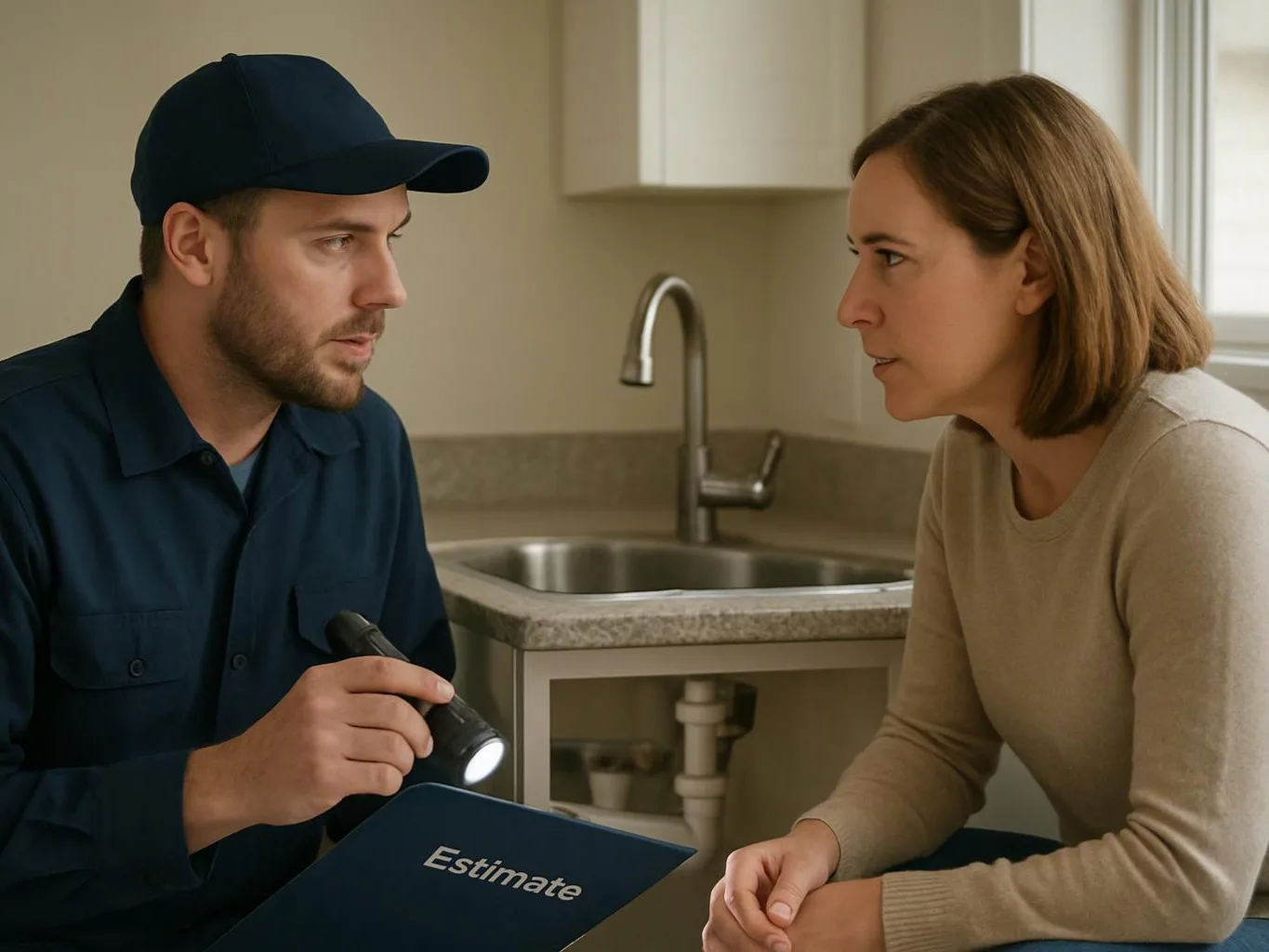
A man with a flashlight talks with a woman beside a kitchen sink and cabinet under it

Service Overview

Leak detection is a plumbing service that traces water loss to its source before repair work begins.

  • Leak detection identifies concealed plumbing problems, while drain cleaning clears blockages inside drains and sewer lines.
  • We provide leak detection for homes and businesses in Bellevue and surrounding South King County communities.

What Leak Detection Helps You Decide

A source check helps separate a concealed pipe leak from a surface moisture problem.

Early diagnosis can guide the choice between a spot repair and broader pipe access.

The findings give property owners a clearer basis for planning plumbing work.

A focused inspection helps limit unnecessary opening of walls or flooring.

Regular checks can help identify recurring leaks before they affect more finished areas.

Process

How We Trace a Concealed Plumbing Leak

1

Review the reported warning signs

We note the location, pattern, and change in stains, odors, mold growth, damp areas, or meter movement.

2

Check fixtures and accessible pipework

We inspect nearby toilets, faucets, water heater connections, shutoff valves, P-traps, and exposed pipe joints.

3

Isolate the likely plumbing section

We use the symptom pattern and available access points to narrow the supply, drain, or fixture section involved.

4

Apply targeted testing when suitable

Acoustic checks, thermal imaging, or a pressure test may help trace concealed water loss when the system supports that method.

5

Explain the repair scope

We describe the likely source, access needs, and repair choices before work proceeds.

Why This Service Fits Concealed Plumbing Problems

Trace the source before opening surfaces

Leak detection starts with the symptom and follows the plumbing path toward the source. We explain where access may be needed. This service is the wrong first step when the only problem is a clear drain blockage with no sign of water loss.

Residential and commercial plumbing knowledge

Our licensed and insured professionals work with homes and businesses, where fixtures, pipe routes, and access points can differ. The inspection stays focused on the affected plumbing system and the property’s actual symptoms.

Repair choices based on the finding

A visible fixture connection may need a focused repair, while a concealed pipe issue may call for more access. We explain the difference so you can choose the next plumbing step with fewer surprises.

What Hidden Leak Checks Include

PlumbingKentwa.link provides comprehensive Leak Detection in Bellevue. Here's what you get:

  • We inspect visible stains, damp areas, mold growth, and nearby plumbing fixtures.
  • We compare the reported symptom with likely supply, drain, and fixture leak sources.
  • We check accessible pipe joints, shutoff valves, P-traps, and water connections.
  • We consider water meter movement when the property has unexplained water use.
  • We explain the likely repair scope and any access needed to reach the source.

Visible Signs and Likely Inspection Focus

The symptom helps determine which plumbing areas receive the first checks.

Warning signInitial inspection focusPossible next decision
Musty odorsNearby walls, floors, fixtures, and damp surfacesTrace moisture source and assess access needs
Wall stainsAdjacent supply lines, drain connections, and exposed jointsChoose focused repair or concealed pipe access
Mold growthMoisture source behind or near the affected surfaceStop the plumbing source before surface treatment
Water meter movementAccessible valves, toilets, water heater lines, and pipingNarrow the active water-loss section

Our Standard

  • Prompt Response
  • Clear Service Explanation
  • Professional Workmanship
  • Clean Work Areas

Customer Reviews for Leak Detection in Bellevue

5(13 Customer Reviews)View our Google Business Profile
Bruce Morehead
Bruce Morehead
10 months ago
Verified on Google
Ryan was so helpful and friendly, and extremely knowledgeable. Thank you so much!!
Michael Melvin
Michael Melvin
a year ago
Verified on Google
Incredibly polite service. Answering all my questions. Done in a timely manner.
tracy dunbar
tracy dunbar
Local Guide9 months ago
Verified on Google
Great service, good quality and you can't beat their pricing.

Questions About Concealed Water Leaks

What signs indicate a concealed water leak?

Musty odors, wall stains, mold growth, and water meter movement can indicate a concealed plumbing leak. A stain may sit away from the actual source because water follows framing or flooring. We check nearby fixtures, valves, exposed pipes, and the affected surface before explaining whether the next step is a spot repair, access work, or another plumbing assessment.

How should I prepare before a leak inspection?

Site access helps the inspection start with the affected plumbing and surfaces. Clear items from under sinks, around water heaters, and near visible stains. Keep photos of the change over time, note recent fixture use, and avoid covering damp areas with fresh paint. Those details help connect the symptom to the plumbing path.

Which plumbing parts are checked first?

Nearby fixtures, shutoff valves, exposed pipe joints, and water connections receive the first checks. The inspection then follows the symptom toward less visible sections, such as a wall cavity or floor run. A toilet supply, P-trap, water heater line, or faucet connection can create moisture that appears in a different room.

Why does a ceiling stain keep spreading?

A spreading ceiling stain means moisture may still be entering from plumbing above or nearby. The stain's position does not always mark the leak because water can travel along framing. Limit use of fixtures above the area if possible, protect belongings, and request an assessment before the surface damage grows.

What changes the quote for a concealed leak check?

Access, suspected pipe location, testing needs, and the number of affected plumbing sections shape the quote. A visible connection may need a focused check, while a leak behind finished surfaces may require more careful tracing. Photos and details about meter movement help us discuss the likely scope before scheduling.

When is a water meter check useful?

A water meter check is useful when fixtures are off but unexplained water use continues. The movement can support the case for an active leak, though it does not identify the exact pipe. We compare the observation with accessible valves, toilets, water heater connections, and other plumbing sources during the assessment.
Contact

Request a Leak Detection Quote in Bellevue

Share the warning signs and affected area so we can discuss the right assessment; urgent requests get priority scheduling.

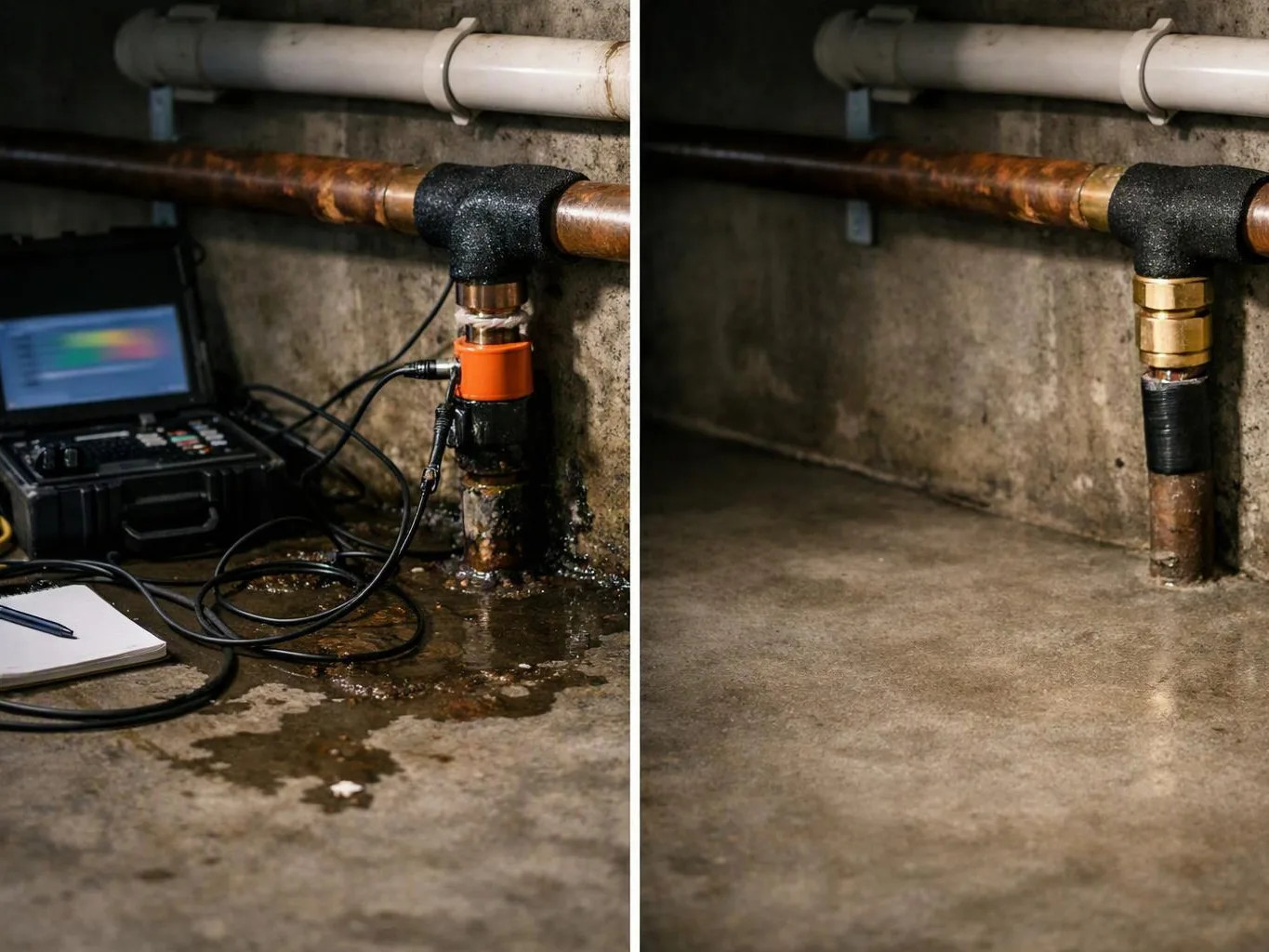
Split view of a corroded pipe with a wrapped leak sensor, water pooling on the concrete floor

ZIP Codes We Serve in Bellevue, Washington

98004980059800698007980089800998015
(425) 475-3519