Tankless or Traditional Water Heater: Comparing Installation Options
Tankless water heaters save space and provide continuous hot water, while traditional storage heaters offer familiar installation and operation. PlumbingKentwa.link compares fuel type, home demand, venting, access, maintenance, and quote details to help you choose.
Request an EstimateQuick Picks
Tankless and traditional water heaters suit different household needs. The best choice depends on hot water demand, available connections, space, and installation access.
- Tankless water heater: Best for homes that want on-demand heating, continuous hot water, and a space-saving installation.
- Traditional water heater: Best for homes that value storage capacity, familiar operation, and existing connections.
Tankless and Traditional Water Heaters Compared
Tankless and traditional water heaters differ in equipment, installation work, maintenance needs, and the homes they suit best. Installation cost and timing depend on the existing fuel source, connection work, access, and selected model.
| Factor | Tankless Water Heater | Traditional Water Heater | Best Fit |
|---|---|---|---|
| Installation cost | May be higher when gas, electrical, or venting changes are needed. | May be lower when existing connections match the new unit. | The option with fewer required site changes. |
| Installation timeline | Can involve more planning for flow rate, gas connection, electrical capacity, and venting. | Can be more direct when the storage tank and connections stay in place. | Homes with compatible existing connections. |
| Maintenance | Needs service for the heat exchanger and system condition. | Needs checks for the tank, anode rod, heating parts, and safety valves. | The system that matches your maintenance plan. |
| Household hot water demand | Supports on-demand heating when the flow rate meets household usage. | Uses tank capacity and hot water recovery to serve demand. | The unit sized for your household demand. |
When a Tankless Water Heater Is the Better Fit
A tankless water heater is usually the better fit when space, continuous hot water, and on-demand heating matter most. Our team checks the unit's flow rate, gas connection, electrical capacity, and venting before recommending tankless water heater installation.
Best for: households that want on-demand heating and have suitable gas or electrical service.
When a Traditional Water Heater Makes More Sense
A traditional water heater is usually the better fit when familiar operation, storage capacity, and existing connections matter most. The storage tank holds heated water, while hot water recovery replenishes the supply after use.
Best for: households that want a familiar storage-tank water heating system with compatible existing connections.
What Changes the Installation Cost for Each Option?
Water heater installation cost depends on the selected unit and the changes needed to connect it safely to the home. We review the fuel type, gas line, electrical service, venting, water connections, and equipment access before preparing an installation quote.
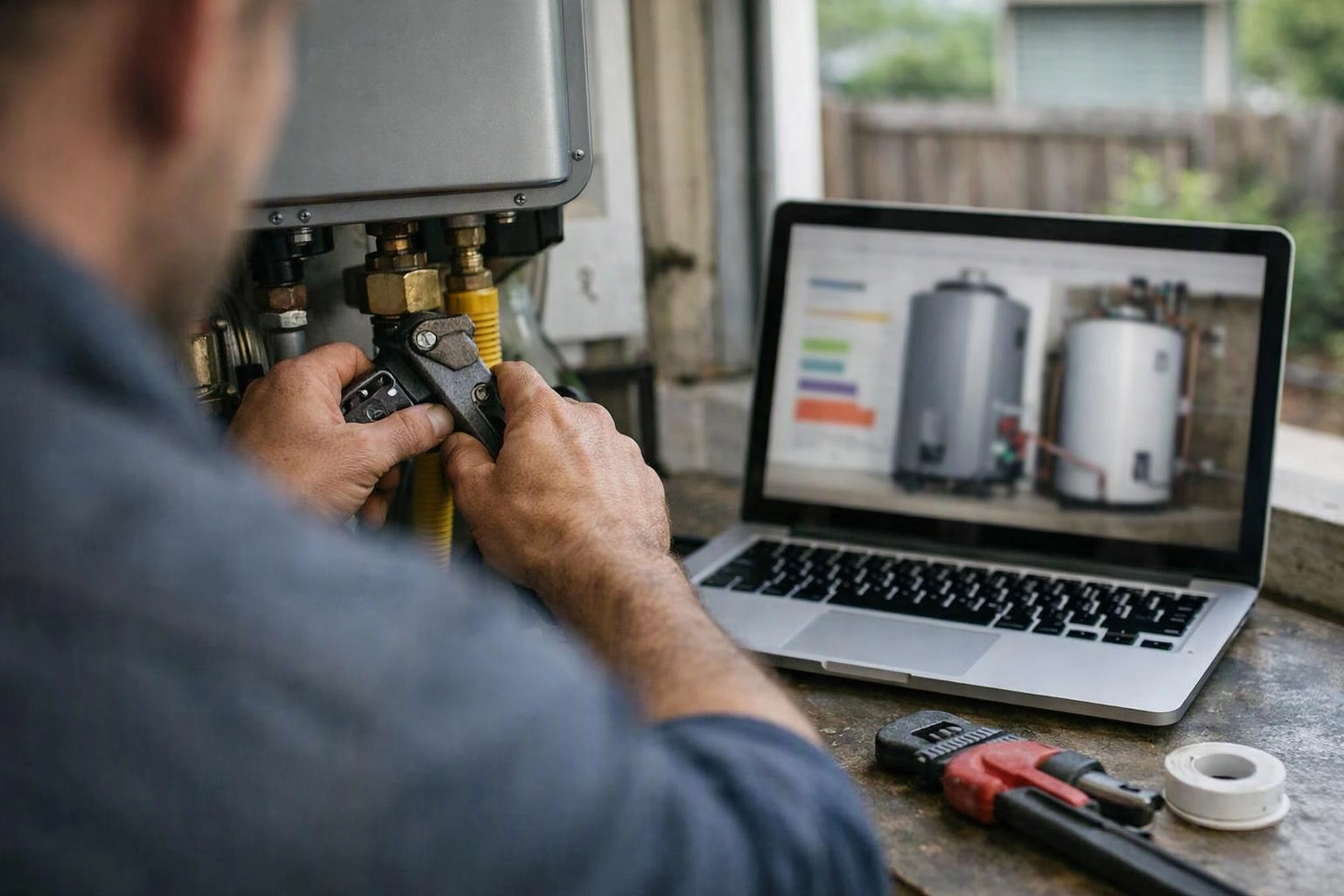
Additional work may include a drain pan, shutoff valve, temperature and pressure relief valve, or vent pipe. The estimate can also change when old unit removal, disposal, or difficult equipment access is part of the work.
Our Water Heater Installation service includes a review of the location and existing connections before we explain the recommended scope.
How Gas and Electric Choices Affect the Estimate
Gas and electric water heaters can require different connection, venting, and capacity work, so fuel type affects the estimate. A gas water heater may need gas supply, a gas line, and suitable venting.
An electric water heater may need electrical panel capacity, a dedicated circuit, and wiring that matches the unit. Our team checks these requirements before including electrical work or gas work in the installation quote.
What a Water Heater Installation Quote Should Include
A water heater installation quote should identify the unit, connection work, safety work, removal needs, and any permit or inspection items. Clear scope helps you understand which work supports the selected system.
We explain any connection changes before work begins. You can request an exact quote by sharing the current heater type, fuel source, location, and household usage.
How We Compare Your Installation Options in Kent
PlumbingKentwa.link compares your household demand, installation location, existing connections, and fuel source before recommending an option. We also review access around the current water heating system and the work needed for safe connections.
For homes in Kent, Washington, we consider whether the location supports the selected tankless water heater installation or traditional replacement. Our team then explains the installation quote, connection work, venting needs, and inspection items that apply.
Use our service-area information when requesting work or an installation quote for your property.
Plan the Right Water Heater Installation
The right installation depends on your hot water needs, available connections, home layout, and selected fuel type. Tankless systems suit on-demand heating and limited space, while traditional systems suit storage capacity and familiar connections.
Before choosing service, confirm the household hot water demand, installation location, fuel source, venting path, and equipment access. We use those details to prepare an installation quote that matches the work your home needs.
Questions About Choosing a Water Heater
Does a tankless water heater need different electrical or gas connections?
Yes, a tankless water heater can need different electrical or gas connections. Gas models may need suitable gas supply and venting, while electric models may need electrical panel capacity and a dedicated circuit.
Can an existing traditional water heater location support a tankless installation?
Yes, an existing traditional water heater location can support tankless installation when access, water connections, fuel source, electrical capacity, and venting meet the unit's requirements. Our team checks those conditions before recommending the change.
What information should I provide when requesting a water heater installation quote?
Provide the current heater type, fuel source, installation location, household hot water demand, and any known access limits. Photos of the unit and nearby connections can also help our team review the installation scope.