When Repeated Plumbing Problems May Point to a Repipe
Repeated leaks, rusty water at multiple fixtures, and home-wide low water pressure can point to widespread pipe failure. PlumbingKentwa.link can inspect the plumbing system and explain whether repair or whole-house repiping fits the problem.
Request an EstimateWhat Problems Can Signal a Home Needs Repiping?
Repeated plumbing problems can signal repiping when several fixtures show related symptoms or repairs keep returning. One symptom may have a local cause, but patterns across the home deserve a closer review.
Pipe material also matters because some materials corrode or deteriorate differently. We review the water supply system as a whole before recommending repair or replacement.
Why Recurring Leaks May Point to Failing Pipes
Recurring leaks may point to failing pipes when leaks appear in multiple areas or return after repairs. A single leak can be caused by isolated damage, but repeated leak recurrence suggests the surrounding pipe may also be worn.
Pipe corrosion can weaken the pipe wall and its joints. Leaks may also develop inside walls, under floors, or near fixtures where they are hard to see.
Hidden leaks can allow water damage to spread before staining becomes visible. We look for moisture patterns, pipe condition, and the location of past repairs during a plumbing inspection.
What Rusty Water at Several Faucets Can Mean
Rusty water at several faucets can indicate corrosion in shared supply pipes, especially when the discoloration keeps returning. Water that looks rusty is often carrying particles from deteriorating water supply piping.
Discolored water from one fixture may come from that fixture or a nearby branch line. Discoloration at multiple fixtures points us toward the shared water supply system.
We check whether the issue follows hot water, cold water, one branch, or the whole plumbing system. That pattern helps separate a local problem from wider pipe corrosion.
Can Corroded Pipes Cause Low Water Pressure Throughout a Home?
Yes, corroded pipes can reduce water pressure throughout a home when buildup restricts the shared water lines. Internal pipe buildup narrows the passage available for water flow.
Low water pressure in one fixture can come from a clogged aerator, valve, or local supply line. Low pressure across several fixtures points more toward the whole-house plumbing or its incoming supply.
We compare pressure symptoms across the home and inspect accessible piping. This helps us decide whether cleaning, pipe repair, or repiping evaluation is appropriate.
When Pipe Repair May Be Enough
Pipe repair may be enough when damage is isolated and the rest of the plumbing system remains in sound condition. A localized leak with no related symptoms may not justify replacing the full supply system.
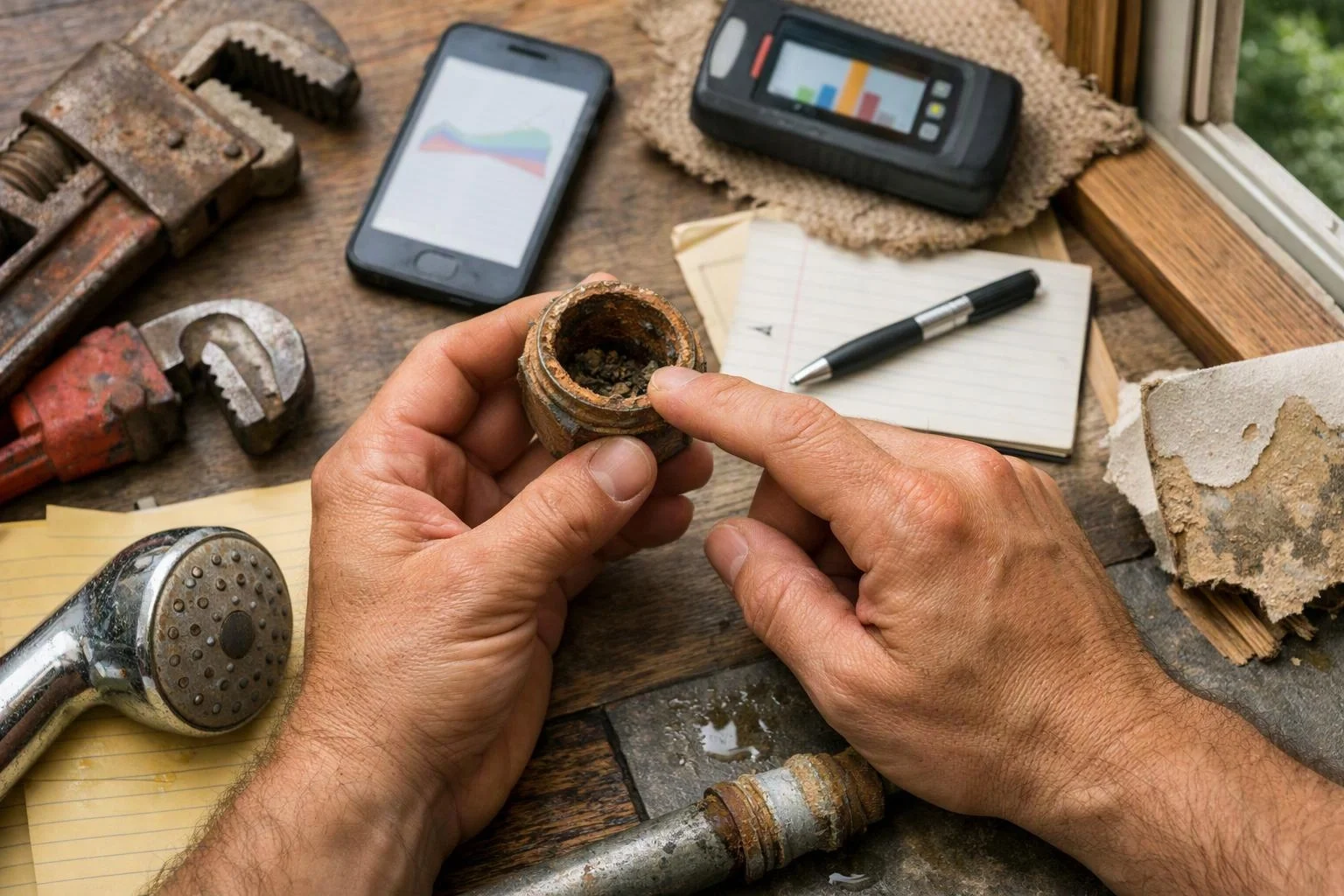
We review the leak location, pipe material, nearby joints, and repair history. Accessible plumbing can often be evaluated more directly, while hidden sections may require additional inspection.
Repair makes sense when the damage is limited and the surrounding pipes show good condition. We explain the repair scope and identify signs that could point to future system-wide work.
DIY Checks and When We Need to Inspect the Plumbing
You can safely note visible symptoms, but PlumbingKentwa.link should inspect suspected pipe failure before repair or repiping decisions. Your observations help us understand when the problem started and where it appears.
Do not open walls, cut pipes, or alter shutoff valves that you don't understand. Those actions can increase water damage and may affect required code or inspection work.
| Factor | What you can do yourself | What we do |
|---|---|---|
| Visible leaks | Note the location and protect nearby belongings from water. | Trace the leak and check nearby pipe joints and surfaces. |
| Water discoloration | Record which faucets show rusty or discolored water. | Compare fixtures and inspect the water supply piping. |
| Shutoff valve | Locate the valve and keep access clear. | Check valve operation as part of the plumbing inspection. |
| Hidden leaks | Watch for stains, damp areas, peeling surfaces, or unusual moisture. | Investigate likely sources without recommending unnecessary wall removal. |
Our team uses the inspection findings to separate visible symptoms from hidden pipe failure. We can then explain the safest next step for the home.
How We Decide Between Repairing Pipes and Repiping
We compare the leak pattern, pipe condition, and affected areas to decide whether repair or whole-house repiping is appropriate. The decision depends on whether the problem is localized or spread through shared supply lines.
During a plumbing inspection, we review pipe material, visible corrosion, past repairs, water pressure, and signs of hidden water damage. We also consider how much of the plumbing is accessible.
When several symptoms connect across the home, whole-house repiping may provide a more complete solution. When the damage is limited, localized pipe repair may better match the repair scope.
What Changes the Cost of a Repiping Decision?
Repiping cost depends on the plumbing scope, pipe material, access, and repairs needed around the work. Homes with difficult wall and ceiling access may require more preparation and restoration.
The number of fixtures and the layout of the water supply system also affect the work involved. We review which lines need replacement and whether related shutoff valves or connections need attention.
Our team provides an exact quote after reviewing the home's plumbing conditions. The quote explains the repair versus repiping scope and the work needed around the selected solution.
Questions About Repeated Plumbing Problems
Does one leaking pipe mean a house needs repiping?
No, one leaking pipe doesn't automatically mean a house needs repiping. We check whether the damage is isolated and whether nearby pipes show corrosion or related symptoms.
How can you tell if old plumbing pipes are failing inside the walls?
Hidden failing pipes often cause recurring leaks, damp stains, rusty water, or pressure changes. We connect those signs with the pipe material, repair history, and accessible sections during an inspection.
Is rusty water from one faucet different from rusty water throughout the house?
Yes, rusty water from one faucet can come from a local fixture or branch line. Rusty water throughout the house more strongly suggests corrosion in shared water supply piping.
Can repiping prevent repeated plumbing repairs?
Yes, repiping can reduce repeated repairs when widespread pipe corrosion causes the leaks. We first confirm that failing supply pipes are the main source of the problem.